Skiing and snowboarding in Argentina are difficult to explain with statistics alone.
Yes, Cerro Catedral is enormous. Its terrain rises above forests and lakes, with views that can stop you during a run. But after the mountains, the most important thing for me is the people: their warmth, hospitality and instinct to share.
You may arrive in Bariloche thinking about snow conditions and lift tickets. Then you make a chairlift friend, get invited to an asado, watch the sun disappear behind the Andes and realise skiing and snowboarding are only part of the story.
This is my experience of skiing and snowboarding in Bariloche. It covers the parts I love, the moments I still remember and the drawbacks worth knowing before you plan your own Argentina ski and snowboard trip.
Cerro Catedral Is Argentina’s Flagship Ski Resort
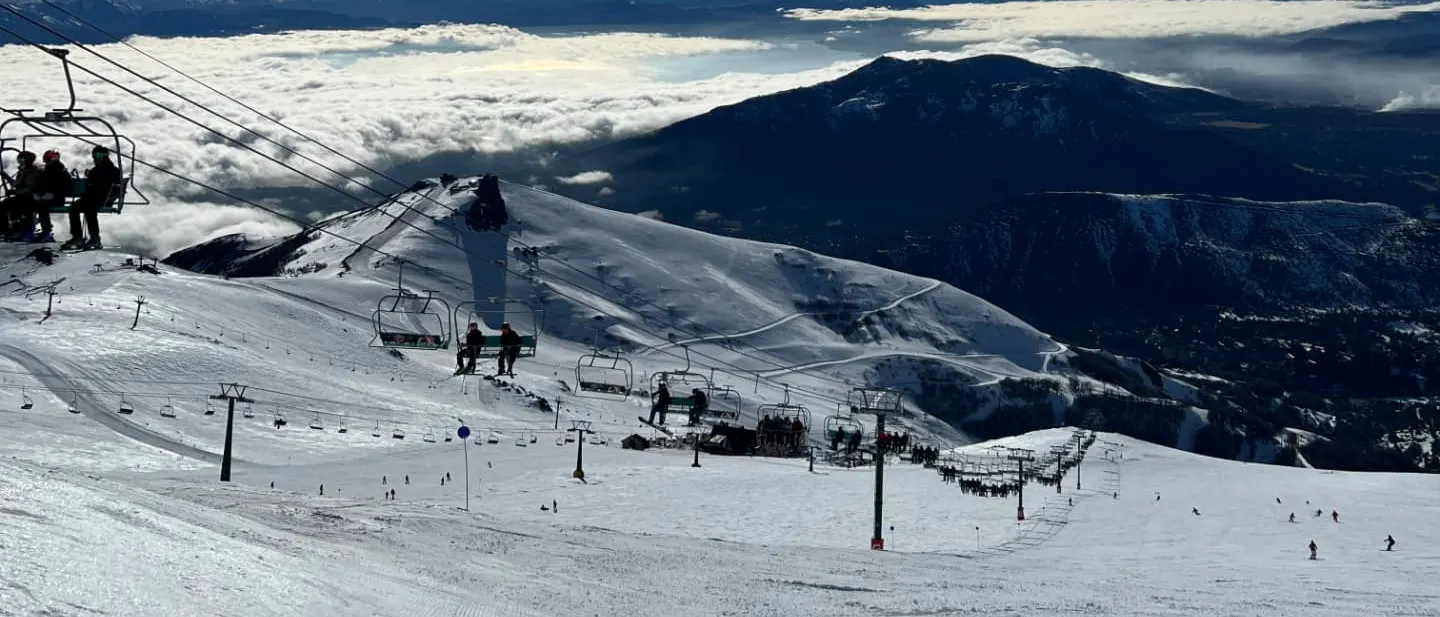
Cerro Catedral is the most popular destination for skiing and snowboarding in Argentina and the country’s most complete resort experience. Official Bariloche tourism currently describes it as the largest ski resort in the Southern Hemisphere, with 120 kilometres of slopes across approximately 600 hectares.
Whether you look at pistes, lifts, sectors or infrastructure, Catedral is not a small regional mountain resort. It takes time to understand. Conditions vary by sector, and wind, visibility and lift operations can change the best plan for the day.
The obvious comparison is Chile’s Tres Valles: Valle Nevado, La Parva and El Colorado. Together, their terrain is slightly larger than Catedral. However, in 2026 they still do not operate as one official ski area spanning all three resorts. Valle Nevado and La Parva offer an official interconnection for eligible tickets and passes, but El Colorado remains outside that unified arrangement.
That distinction matters. On paper, three neighbouring resorts can produce a bigger number. In practice, Catedral remains one enormous, recognisable winter sports destination with a major base village and Bariloche only about 19 kilometres away.
If you want a broader comparison of the region’s mountains, start with my guide to where to ski and snowboard in South America.
The People Matter as Much as the Mountain
For me, the mountains come first. Immediately after them come the people.
Argentinians have a way of making an interaction feel personal very quickly. It is completely normal to start talking to someone on a chairlift and finish the ride feeling as though you have known each other much longer than five minutes.
Someone may offer you an alfajor. On a calm day, they may pass you a sip of whatever they brought with them. A conversation about which sector has the best snow can become an invitation to spend a few runs together, meet later or join an asado that evening.
It does not feel like organised hospitality. Nobody is following a scripted customer service routine. It feels natural because the culture itself is generous. Food is offered. Drinks are passed around. Information is shared. There always seems to be room for one more person.
This makes skiing and snowboarding in Argentina especially good for solo travellers. You can arrive alone without feeling alone for very long, particularly if you are willing to say hello and use whatever Spanish you have.
Mate Explains the Culture Better Than I Can
If you want to understand why sharing feels so natural here, look at mate culture.
Mate is not simply a caffeinated drink made with yerba mate. In a group, one person, the cebador, prepares it, fills it with hot water and passes the same cup and bombilla around one person at a time. It is a small ritual built entirely around taking turns and sharing.
You see it everywhere: in homes, parks, workplaces, cars and, of course, on the mountain. The invitation to drink mate is also an invitation to join the moment. You do not need to know everyone in the group first.
For me, that circle represents something larger about Argentina. Things are rarely enjoyed in isolation when they can be offered to the people nearby. The alfajor on the chairlift, the sip of a drink and the plate passed across an asado table all come from the same instinct.
Argentina’s Food Culture Goes Far Beyond Steak
Argentina is famous for beef, and rightly so. Asado nights are one of the great pleasures of spending time here. But an asado is not just meat on a grill. It is an evening organised around the fire, with the asador controlling the embers while everyone else talks, drinks, snacks and waits. The meal can take hours because nobody is trying to rush it.
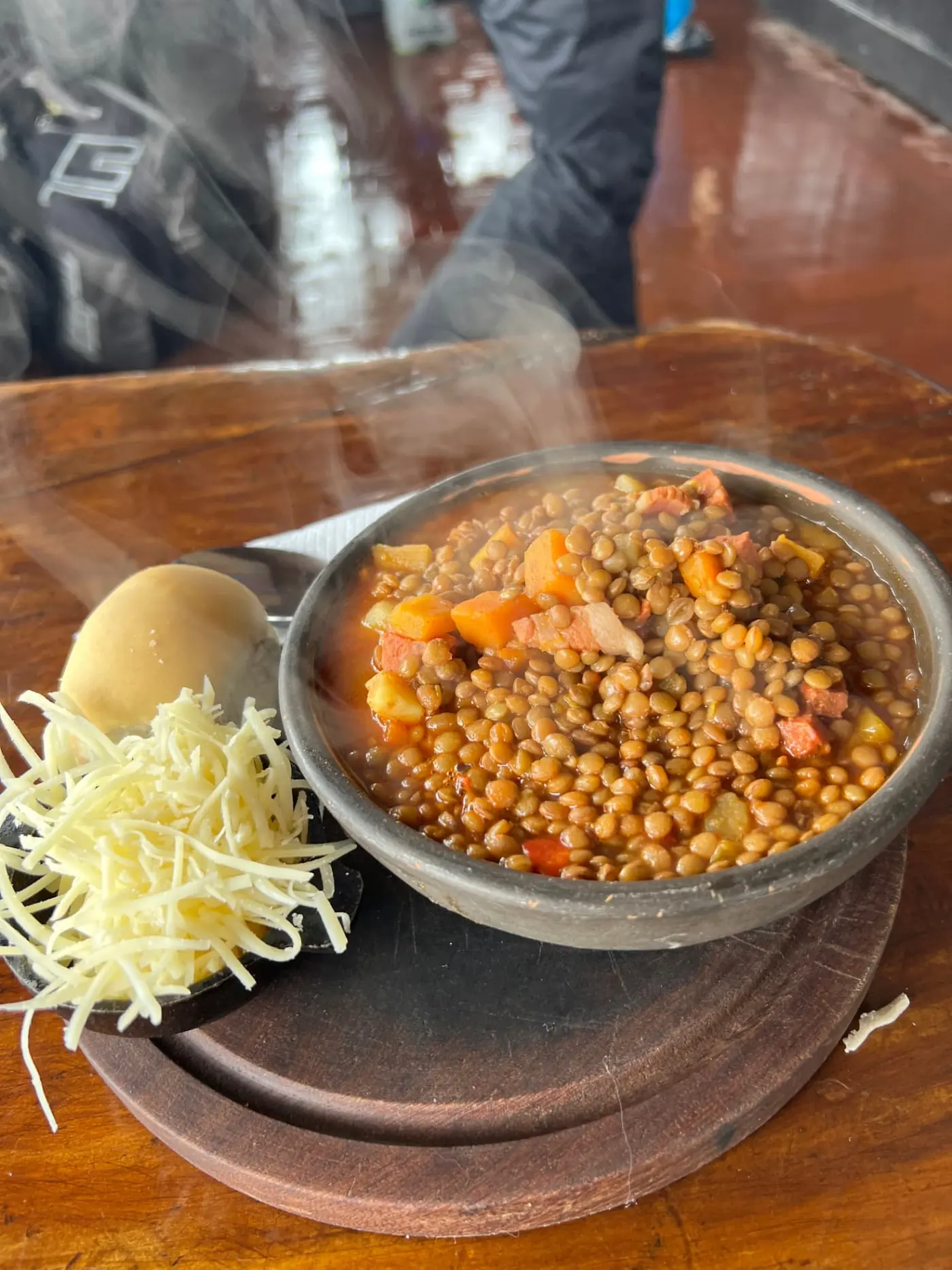
Visitors who do not eat meat have more options than many people expect. A vegetarian guiso de lentejas is a warming lentil stew that makes perfect sense after a cold day. Ñoquis and other fresh pastas are everywhere, while fugazzeta, a thick, cheese-filled onion pizza, is one of the country’s most satisfying comfort foods. Humita empanadas, filled with corn and often cheese, are another easy vegetarian option.
That pasta and pizza culture is not accidental. Large waves of Italian migration during the nineteenth and twentieth centuries left a permanent mark on Argentine food. Pizza, pasta, ñoquis, ravioli, gelato and long family meals became part of the country’s own identity rather than remaining “foreign” food.
The result is a food culture that is both Argentine and deeply influenced by Italy, and it suits mountain life perfectly: generous portions, comforting dishes and dinners that continue long after everyone has finished eating.
The Day I Thought My Skis Had Been Stolen
One of my strongest memories from my first visit to Catedral happened in 2021 outside El Barrilete restaurant, high on the mountain.
I went in for a coffee and came out to find my skis gone. I assumed they had been stolen, but Pablo, the owner of El Barrilete, was 100 percent certain there were no thieves at Catedral. Someone had taken them by mistake, he said.
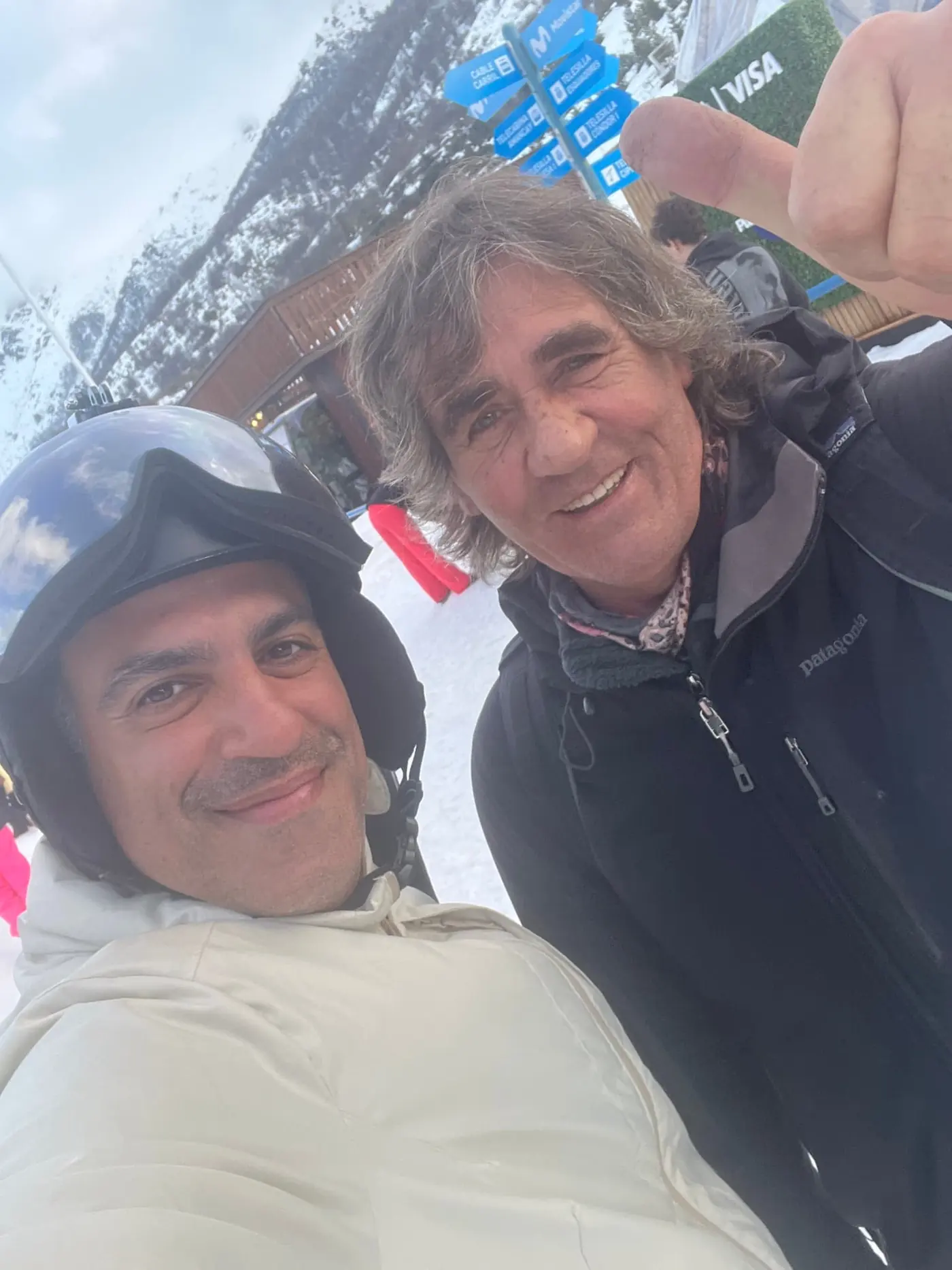
He lent me his own skis so I could stay on the mountain.
His advice was simple: stay until the last people left. At the end of the day, an extra pair would probably remain, belonging to the person who had taken mine by mistake.
That is exactly what happened. The pair left behind had rental stickers, so I found the rental shop, returned those skis and managed to recover my own.
The person who had mistakenly taken my skis left me a bottle of Malbec as an apology. Pablo had been completely right. What stayed with me was his absolute certainty that theft was not the explanation and how quickly he treated my problem as his own.
When Your Problem Becomes Everyone’s Problem
That story reflects my wider experience of safety and honesty in Bariloche.
I have left my laptop unattended in restaurants without a problem. It is rare, in my experience, for a taxi driver to try to overcharge me or for a shop owner to change the price simply because I look foreign.
Of course, this is my personal experience, not a promise that nothing can ever happen. Normal travel precautions still make sense anywhere in the world. But I have generally felt comfortable and looked after here.
The part I appreciate most appears when you ask someone for help. You explain a problem, and suddenly it becomes their problem too. People call a friend, ask the person working next door, search for an answer or walk you to the right place. They do not only point in a direction and return to their day. They want to see the problem resolved.
That kind of hospitality is difficult to measure, but it changes an entire trip.
The Views, Sunrises and Sunsets
Then there are the views.
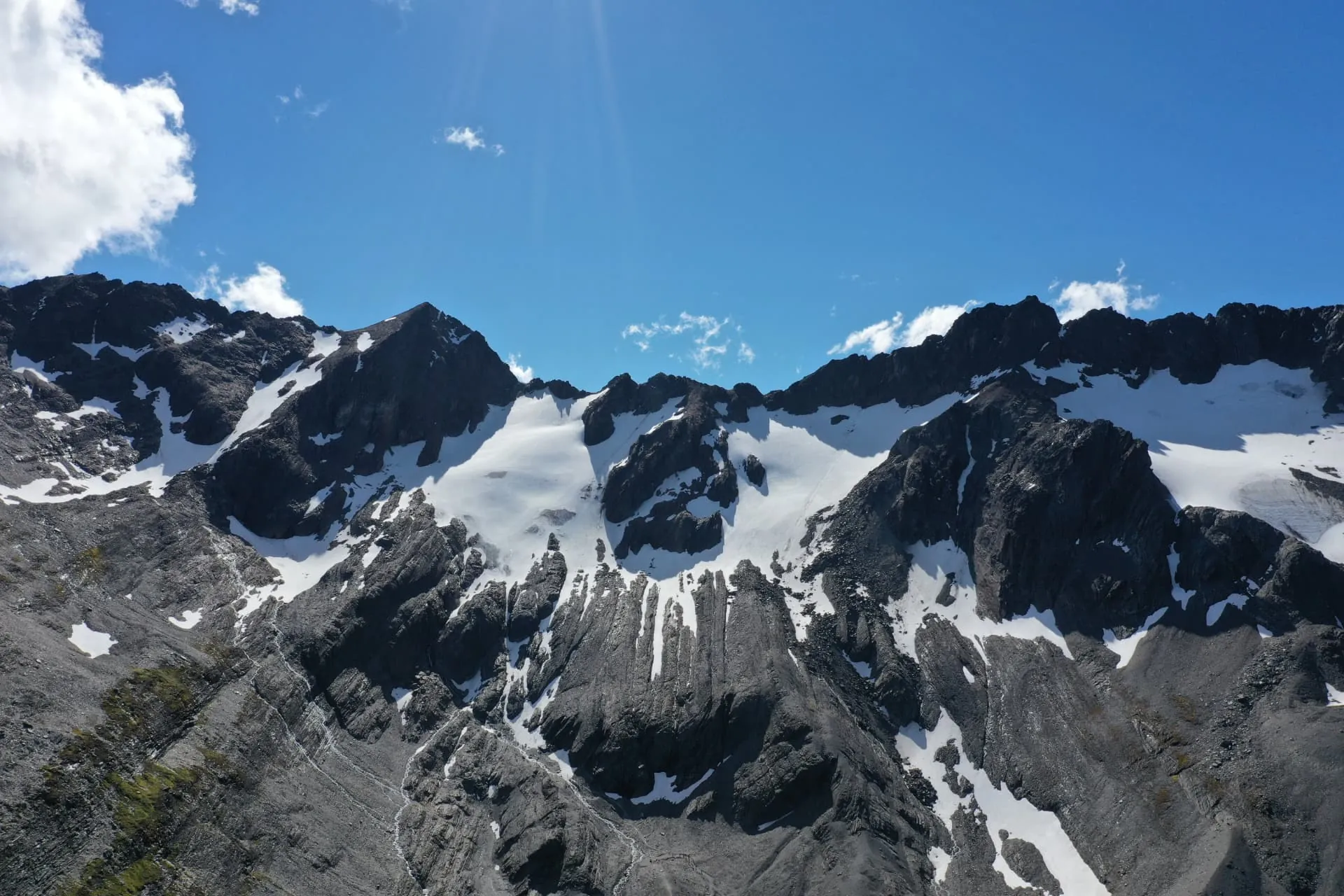
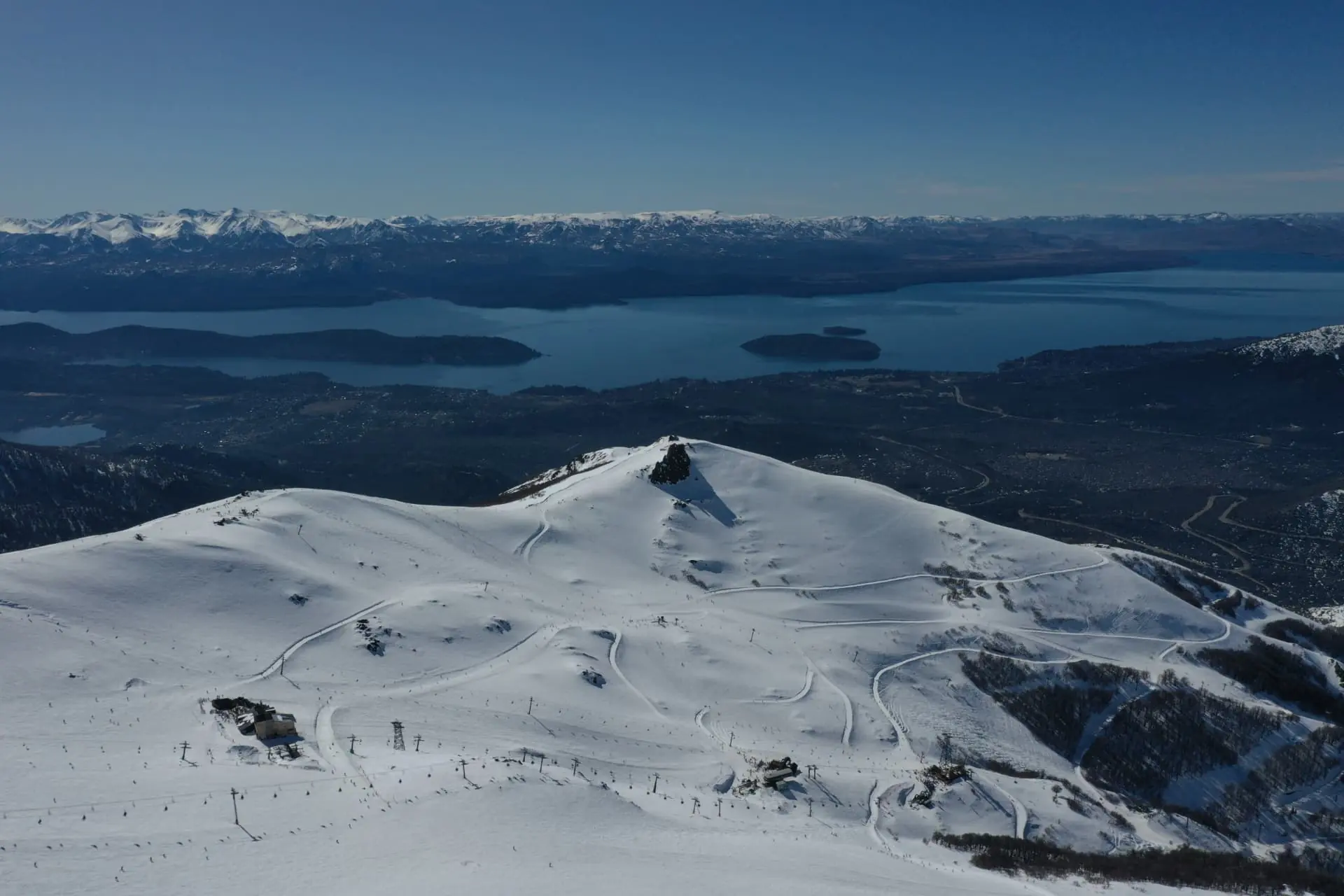
Cerro Catedral looks across the lakes, forests and ridges of northern Patagonia. From the upper mountain, Nahuel Huapi seems to stretch forever, broken by islands and surrounded by peaks running toward Chile. On clear days, the scale is extraordinary.
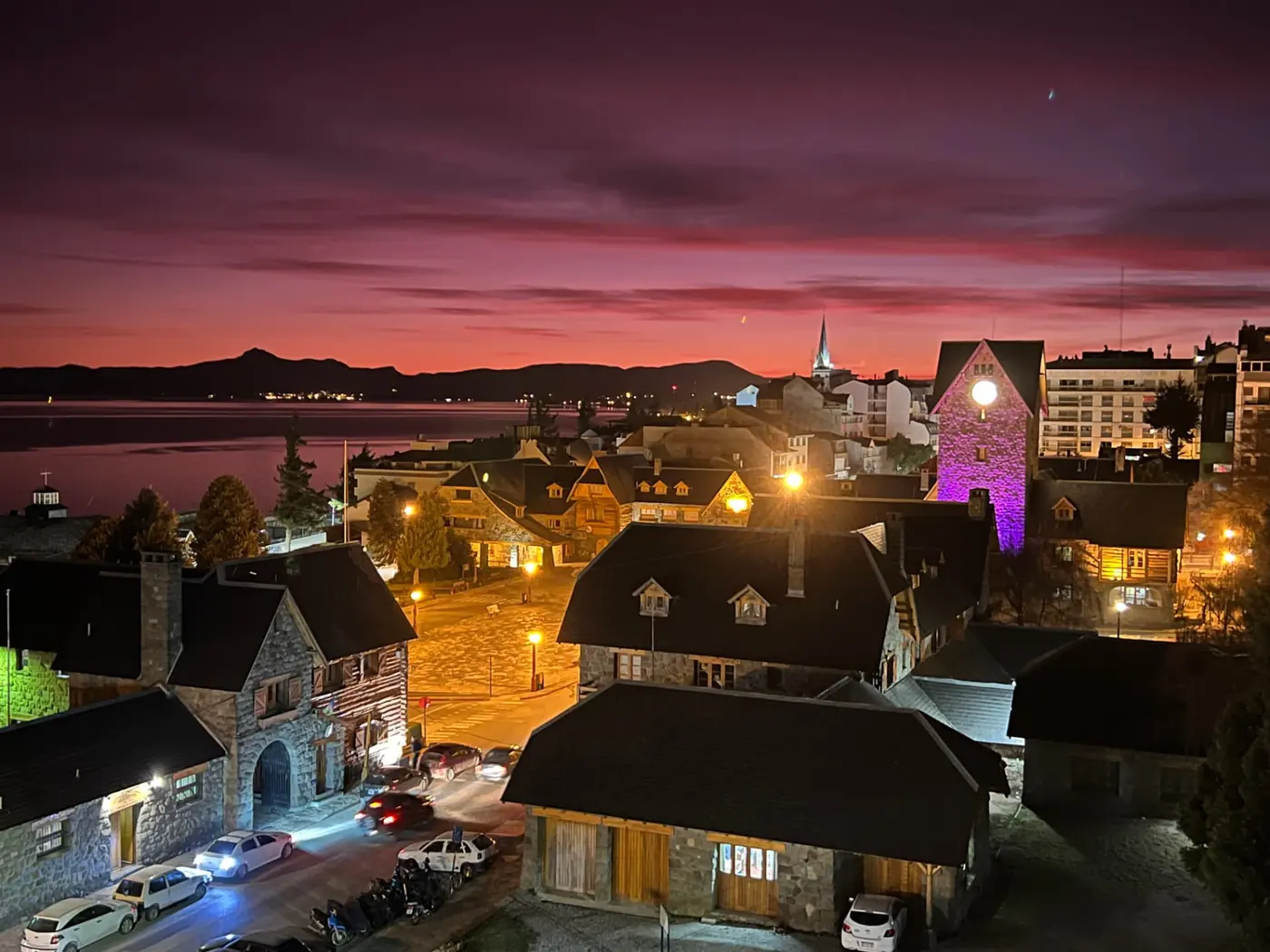
The sunrises and sunsets are, quite literally, some of the most beautiful I have seen anywhere. Early light turns the ridges pink and gold. In the evening, the sky can move through orange, red and purple while the lakes below become almost black.
You sometimes stop during a run simply to look. I have been on many beautiful mountains, but the combination of snow, forest, rock and enormous blue lakes gives Patagonia skiing and snowboarding its own visual identity.
The Drawbacks: Prices, Language and Short Seasons
I love Catedral, but that does not mean everything is perfect.
The first drawback is price. Argentina used to feel much cheaper for visitors earning dollars or euros. Since Javier Milei came to power, inflation has slowed considerably and the peso has become more stable. I am happy for my Argentine friends, because many can now afford a day on the mountain and other parts of daily life much more easily after years of exhausting economic uncertainty.
For foreign visitors, however, it also means the old bargain has largely disappeared. The peso is no longer losing value day after day in the way many repeat travellers became accustomed to, while local prices have risen significantly in dollar terms. Accommodation, restaurants, lift passes and everyday expenses can now surprise people arriving with an outdated idea of Argentina as an extremely cheap destination.
The second drawback is the language. Many people in Bariloche speak some English, especially in tourism, but English is not universal and should not be expected in every taxi, shop, restaurant or mountain interaction. You can manage a short trip without much Spanish. If you plan to stay longer, I strongly recommend taking at least a basic course. It will make practical life easier, but more importantly, it lets you participate in the culture instead of watching it from outside.
The third drawback is that commercial operating dates do not always follow the snow.
One of my saddest days at Catedral was September 30, 2025. I was there. It was a powder day, the mountain still had winter conditions and, in my view, the season could easily have continued for another two or three weeks.
But the contractor’s obligation only ran until the end of September, so the lifts shut down that day. Watching a resort close on a powder day felt completely wrong. The calendar said the season was finished. The mountain clearly disagreed.
That experience is one reason I tell people to understand the difference between snow conditions and resort operations. My guide to the best time to ski and snowboard in South America explains that uncertainty in more detail.
Why Cerro Catedral Still Feels Different
Catedral is not perfect. It can be busy. Wind affects operations. Prices are higher than they used to be, English is not always available and the official closing date can arrive while good snow is still on the mountain.
Yet those drawbacks do not cancel what makes the place special.
There are bigger statistics elsewhere if you combine several resorts. There are higher mountains in Chile and more polished resort systems in Europe or North America. But Catedral gives me something I value more than efficiency: a sense of belonging.
I come for a serious mountain and some of the most beautiful views in skiing and snowboarding. I stay for the people who share their food, their drinks, their knowledge and their time. I stay for mate rounds, long asado nights, comfort food shaped by Italian influence and the feeling that asking for help is often the beginning of a friendship.
That is why Cerro Catedral feels different to me. The snow brings you here. The people make you want to return.
If you are still deciding between both sides of the Andes, read my honest comparison of Argentina vs Chile for skiing and snowboarding. If you are wondering whether the journey is worthwhile at all, I have also answered the question is skiing and snowboarding in South America worth it?.
Planning Your Own Ski and Snowboard Trip to Argentina
Every traveller has different priorities. Some want powder and challenging terrain; others care more about food, atmosphere, logistics, value or time to understand a mountain as complex as Catedral.
That is why I created YourSnowPlanner. I help skiers and snowboarders choose the dates, destinations, accommodation and practical details that fit the trip they actually want, rather than a generic itinerary designed for everyone. If you want help choosing what fits you, start planning your trip.
Even if you do not need planning help, I hope this article gives you a more honest sense of what skiing and snowboarding in Argentina feel like beyond the piste map.
Frequently Asked Questions
Is Cerro Catedral the largest ski resort in the Southern Hemisphere?
Official Bariloche and Argentina tourism sources describe Cerro Catedral as the Southern Hemisphere’s largest ski resort. It has approximately 120 kilometres of slopes across 600 hectares. Comparisons vary depending on whether size means marked pistes, total hectares, lifts or combined neighbouring resorts.
Are Valle Nevado, La Parva and El Colorado interconnected in 2026?
Not as one fully integrated system spanning all three resorts. Valle Nevado and La Parva offer an official interconnection for eligible 2026 tickets and passes, subject to conditions. El Colorado is not included in that unified arrangement.
Is Bariloche safe for foreign skiers and snowboarders?
My personal experience has been extremely positive. I have generally found people honest and helpful, and I have rarely felt targeted for looking foreign. However, visitors should still use the same sensible precautions they would use in any tourism destination.
Do I need Spanish to ski or snowboard at Cerro Catedral?
You can manage a short visit with limited Spanish, particularly in hotels and tourism businesses. For a full season or longer stay, basic Spanish makes daily life much easier and helps you connect with the people who make the destination special.
Are skiing and snowboarding in Argentina still cheap for foreigners?
Not in the way it once was. A more stable peso and higher prices measured in dollars mean accommodation, restaurants and a ski or snowboard trip can cost considerably more than returning visitors remember. Argentina can still offer excellent value, but it should no longer be treated automatically as a budget ski destination.
Author
Khosro Ronagh (Cogo)
Founder of YourSnowPlanner. 150 to 200 ski days a year across the world including Argentina, Chile, the Alps, Japan, Alaska and major ranges. Personal planning for skiers heading to South America.
About Cogo →