An experienced skier or snowboarder does not need another generic packing list explaining that gloves are important. The real question is whether a rental fleet in Argentina or Chile will have the ski, snowboard, boot flex, binding system or width that suits the mountain you are traveling to.
I make that decision resort by resort. Cerro Catedral is not Las Leñas, and renting in Bariloche is not the same as renting in Santiago before driving to Valle Nevado. The right answer also changes if the plan includes powder skis, a freeride snowboard, touring equipment or several resorts in one trip.
How the resort changes my gear decision
For lift served days at Cerro Catedral, Chapelco or the resorts above Santiago, a good all mountain ski or freeride snowboard covers a lot of conditions. For Las Leñas, a strong skier may care more about edge hold, stability and a wider platform for Marte terrain. For a trip involving sidecountry, touring or heliskiing, I confirm beacon, shovel, probe, backpack and binding compatibility before booking anything.
My rule is simple. I bring custom boots, footbeds, liners, goggles, gloves and any technical item that must fit perfectly. I rent skis or a snowboard only when the shop can confirm the category, length, width and model level I need. The word "advanced" on a rental menu tells me very little.
Ski and snowboard rental in Bariloche and Cerro Catedral
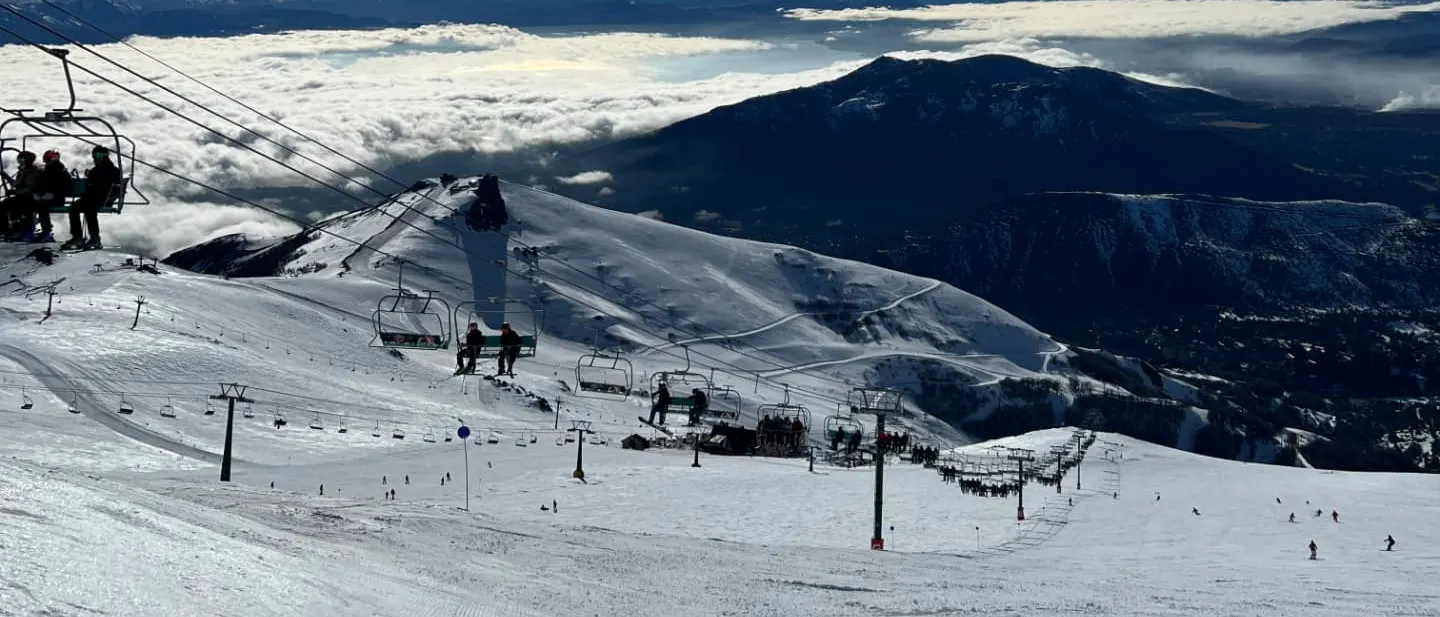
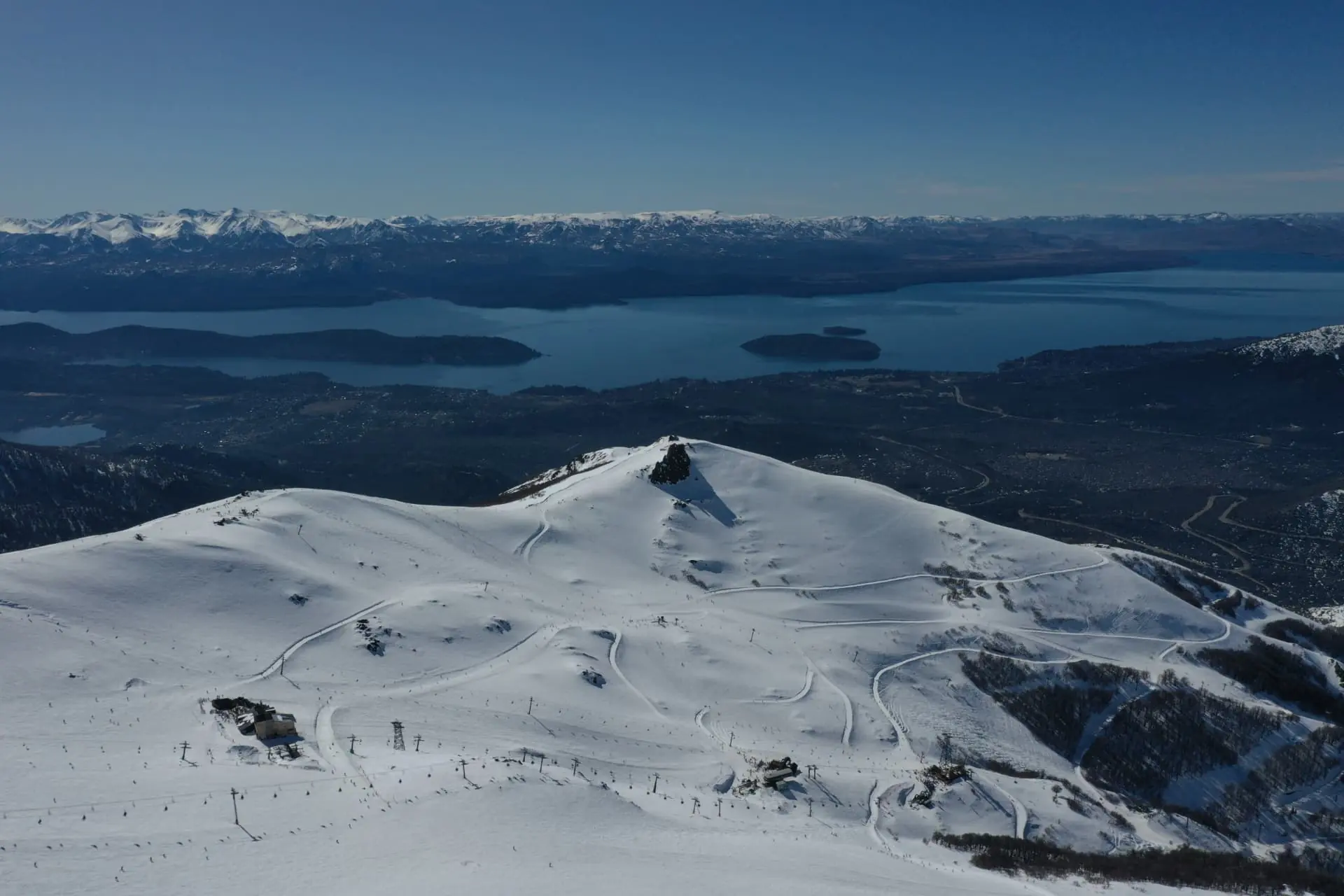
Bariloche has the strongest ski and snowboard retail network among Argentina's mountain cities. The centre has local Patagonian outdoor brands and international names, including a Salomon shop. The base of Cerro Catedral also has several rental and retail operations, so equipment can be collected beside the lifts.
Standard ski rental in Bariloche is easy to find. Complete ski and snowboard setups, helmets and outerwear are widely available. The important question for a good or advanced rider is the depth of the premium fleet. Powder skis, stiff freeride boards, splitboards, race skis, touring bindings and uncommon boot sizes are available in much smaller numbers than ordinary all mountain equipment.
I ask for the exact waist width, length, flex and binding compatibility before reserving. Snowboarders should confirm stance width and angles, not accept the shop default. Skiers using GripWalk, alpine touring soles or a high DIN setting should confirm compatibility in writing.

A rental at the Catedral base makes midweek swaps and overnight storage easy. A Bariloche city rental can offer more choice and a better price, but it means carrying equipment to the mountain. If a trip includes several days at Catedral, I choose between those two options based on the value of an easy equipment change after the first run.
Chapelco, Cerro Bayo, Las Leñas and other Argentina ski resorts
Chapelco and Cerro Bayo both have ski and snowboard rentals, but the high performance inventory is naturally smaller than in Bariloche. For a specific freeride ski, a stiffer snowboard or an uncommon boot size, I reserve early or bring my own equipment. The same logic applies to Perito Moreno, where arriving without confirmation creates an unnecessary gamble.
Las Leñas is the Argentina resort where I am least willing to depend on buying a missing technical part after arrival. It is an isolated mountain base, not a large city. If Marte terrain is the reason for the trip, I bring the setup I trust, plus any unusual binding component or replacement part.
Cerro Castor has rentals and Ushuaia has outdoor shops, but it is still a smaller market than Bariloche or Santiago. On an Argentina ski trip combining Catedral, Chapelco, Cerro Bayo, Las Leñas or Castor, bringing my own boots and renting only skis or a snowboard gives me the best balance between consistency and baggage weight.
Ski and snowboard rental in Santiago and central Chile
Ski rental in Santiago, Chile, is a different market. Santiago is a capital city with more shops, more brands and more competition. Selection is generally wider and prices are usually lower than in Bariloche, for both purchasing and renting ski or snowboard equipment.

Valle Nevado, La Parva and El Colorado all have resort rentals, including premium or high end categories. Farellones also has rental options, although I treat it as a snow park and village rather than a substitute for the three main ski areas. None of these four destinations requires an internal flight after landing in Santiago.
If I plan to ski or snowboard several of the Santiago resorts, I prefer one properly fitted setup from a Santiago shop. That avoids repeating the fitting process and lets me move between Valle Nevado, La Parva and El Colorado with the same equipment. If I want to change ski width or snowboard type as conditions change, renting at the mountain makes swaps simpler.
Portillo is also reached by road from Santiago, but its isolated hotel format makes forgotten specialist gear inconvenient. Nevados de Chillán is a separate southern Chile trip rather than part of the Santiago day trip circuit. For either destination, I confirm the exact rental category before leaving home.
Buying ski and snowboard equipment in Argentina versus Chile
Argentina has reduced some import duties, but imported technical clothing and equipment still tend to cost more than comparable products in the United States or Canada. Bariloche is perfectly capable of replacing a damaged goggle lens, glove or jacket. I would not plan to buy premium skis, a snowboard, bindings or boots there as a way to save money.
Santiago is the better shopping stop if I need a broader choice of Salomon and other major ski brands. It is also the more logical place to compare touring equipment, premium outerwear and technical accessories before heading into the Chilean Andes. For a full season, I buy critical equipment at home or in Santiago and use Bariloche shops for local advice, service and replacements.
Flying with ski or snowboard gear in Argentina
Flights from Buenos Aires affect every Bariloche, Chapelco, Las Leñas and Cerro Castor equipment decision. An international allowance does not automatically carry onto the domestic sector, and the difference can make a carefully packed ski bag overweight.
At the time of writing, Aerolíneas Argentinas publishes a 15 kg maximum for additional baggage on flights within Argentina, compared with 23 kg on regional and international services. JetSMART classifies bags between 158 and 230 linear cm as oversized baggage and applies a standard maximum of 23 kg. Both airlines can change charges and fare conditions, so I check the exact route before paying.
I do not book Flybondi for an Argentina ski or snowboard trip. In January 2026, Argentina's aviation authority opened infraction proceedings over Flybondi cancellations made without advance notice. One lost travel day can remove a meaningful part of a short mountain trip.
I keep fitted boots in cabin baggage when the airline permits it. Skis, snowboard, bindings and poles go in a purpose built bag with contact details and a tracker. Avalanche airbag cylinders and batteries require separate airline approval, so I never assume that a backcountry pack can be checked normally.
What I pack for Patagonia and the high Andes
For Cerro Catedral, Chapelco and Cerro Bayo, I want a shell that handles wind and heavier lower mountain snow, plus a low light goggle lens for changing Patagonian visibility. For Cerro Castor, I give extra weight to warmth because of the southern latitude.

For Valle Nevado, La Parva, El Colorado and Portillo, exposure and altitude matter more. I pack for roughly −8 °C on the mountain, strong wind, intense sun and long time above the tree line. My kit includes a shell, adjustable insulation, warm gloves, face protection, a bright light lens and a proper low light lens.
I do not fill the bag with duplicate jackets. I use one reliable outer layer, vary insulation underneath it, and reserve baggage weight for boots or technical equipment that may be difficult to replace.
My final decision
For one resort and a short trip, premium rental can make sense. For a multi resort Argentina trip, Las Leñas, touring days or a full season, I bring the equipment whose performance I already know. For Chile, Santiago makes renting or buying easier before driving into the Andes.
The answer depends on the resort, dates and the way I plan to ski or snowboard. Those are also the questions built into Start Planning, so the equipment decision sits inside the trip rather than becoming a generic packing checklist.
Filed under
Author
Khosro Ronagh (Cogo)
Founder of YourSnowPlanner. 150 to 200 ski days a year across the world including Argentina, Chile, the Alps, Japan, Alaska and major ranges. Personal planning for skiers heading to South America.
About Cogo →