Field notes & trip reports

From the
mountain.

Trip reports, conditions essays and planning notes from Argentina and Chile. Written by Cogo, 150 to 200 ski days a year across the southern Andes.

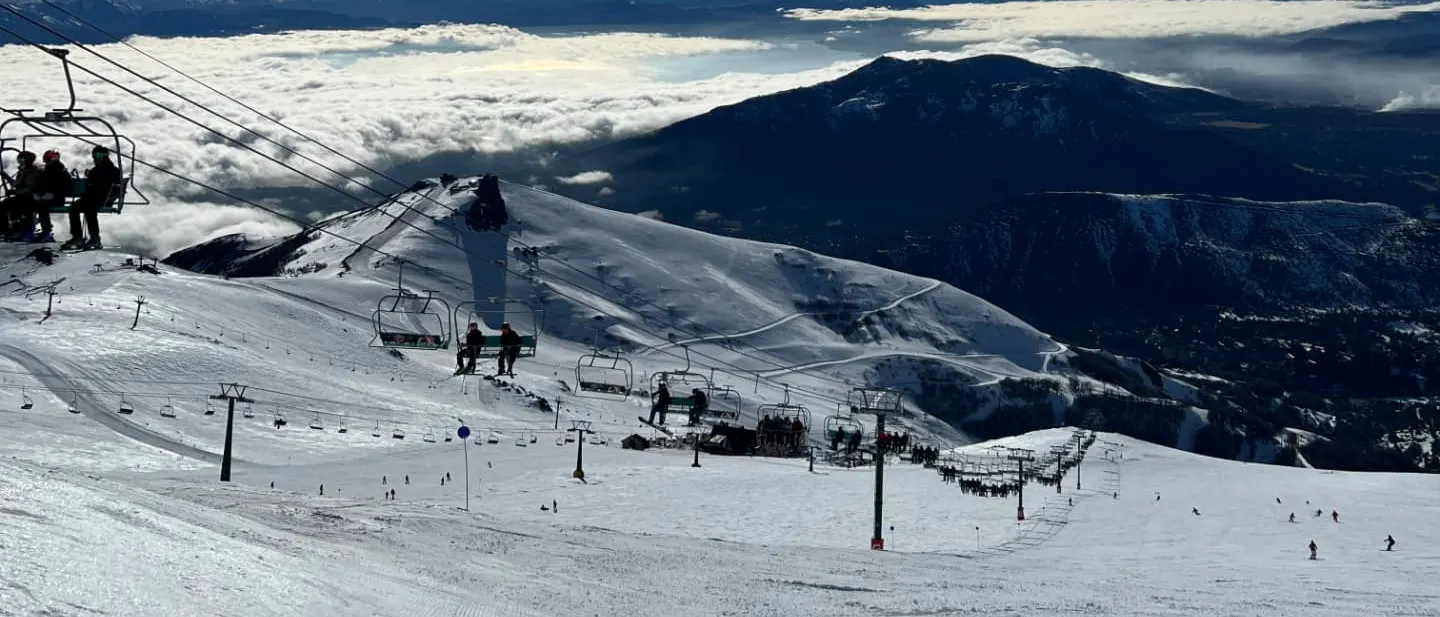
August storm cycle at Cerro Catedral, what actually skied
Field report·August 18, 2025·6 min read

August storm cycle at Cerro Catedral, what actually skied

Three back-to-back fronts, two wind holds, and the back-lot lap that saved the week.

Three storms hit Bariloche in seven days. On paper that's a dream week. In practice, half the upper mountain was wind-held for two of those days, and the new snow was getting blown into pockets faster than the lift system could open the terrain.

If you only watched the lift status board, you would have thought the week was a bust. It wasn't. The trick at Catedral during a storm cycle is to stop trying to ski the high terrain and start skiing the protected aspects below tree line, Princesa and the lower Nubes traverses kept producing soft snow long after the upper bowls were scoured.

The lap that saved the week: the back-lot run skier's left of the Princesa lift, dropped through the lower trees, and traversed back to the Lynch chair. Repeated for two hours on the windiest morning. Empty, soft, and short enough that you could keep moving when you got cold.

Takeaway for trip planning: don't lock your week to Catedral's marquee terrain. Build in a flex day on every Bariloche itinerary, accept that one storm day will be a lower-mountain day, and put the upper-mountain push on the bluebird that always follows.

, Cogo
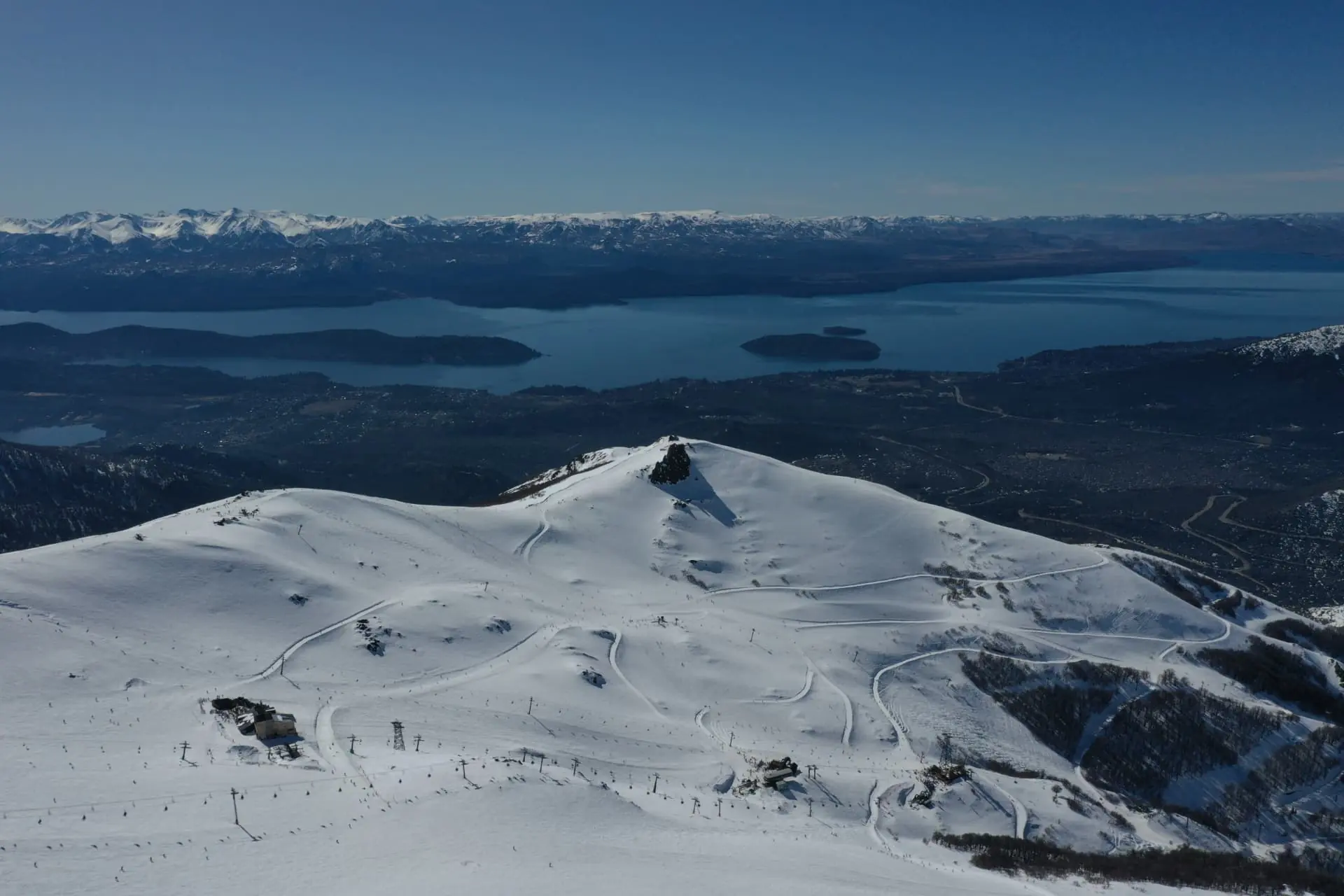
Tres Valles vs Portillo: how to actually choose for a 9-day Chile trip
Planning·July 30, 2025·8 min read

Tres Valles vs Portillo: how to actually choose for a 9-day Chile trip

Forecast logic, transfer costs and the case for splitting the week between both.

Every Chile trip eventually runs into the same fork: Tres Valles (Valle Nevado, La Parva, El Colorado) or Portillo. Both are world-class. Neither is universally right.

Tres Valles wins on flexibility. You're 90 minutes from Santiago, you can hotel-hop between three connected resorts, and you have the city for rest days and food. It's the right call for groups with mixed levels, anyone who wants to combine skiing with wine country, and any trip where weather might force you to pivot.

Portillo wins on experience. Seven-night fixed packages, one hotel, full board, 450 guests max. The lift system is small but the terrain, especially the Roca Jack and Condor lifts on a powder day, is some of the best inbounds skiing in the southern hemisphere. It is not flexible. You arrive Saturday, you leave Saturday, and that's the trip.

For a 9-day trip the honest answer is usually: split it. Three or four nights at Portillo (catch a Saturday-to-Wednesday or Wednesday-to-Saturday window), then five nights in Tres Valles for the back half. You get the lodge experience without committing the whole week, and you keep flexibility for the second half when the forecast clarifies.

The one case to skip Portillo: if you're chasing a specific storm forecast and want freedom to drive between zones. Portillo's value is in surrendering to the program. If you can't surrender, don't book it.

, Cogo
Crossing Paso Cristo Redentor in winter, when it's worth it
Logistics·July 15, 2025·5 min read

Crossing Paso Cristo Redentor in winter, when it's worth it

The Mendoza ↔ Santiago land crossing, road closures, and the bus vs car trade-off.

Paso Cristo Redentor is the main land border between Mendoza and Santiago. In summer it's a casual drive. In winter it closes, sometimes for a few hours, sometimes for three days, and that uncertainty is the whole story.

When it's open and clear, the crossing takes 6 to 8 hours bus, 5 to 6 hours car. Stunning drive, real Andes scenery, and dramatically cheaper than flying. When it's closed, you wait. Drivers sleep in their cars at the customs complex. Buses turn around.

The honest rule: only plan the land crossing if your schedule has a flex day on either side. If you have a flight to catch, fly. Santiago,Mendoza is a 55-minute flight and there are 6 to 8 daily options. The bus is romantic until your transfer to Las Leñas gets pushed back 24 hours.

When it is worth it: you're moving slowly through both countries, you have time, and you want to see the high Andes from the ground. Take the morning Andesmar or Cata bus from Mendoza. Sit on the right side going west. Bring water, snacks, and a book, the customs stop alone can take two hours.

, Cogo
Las Leñas with a powder forecast, the week that lived up to it
Trip report·August 5, 2025·7 min read

Las Leñas with a powder forecast, the week that lived up to it

Marte chair openings, the Eduardo's traverse, and why timing trumps everything in Malargüe.

Las Leñas has a reputation. When it's on, it's arguably the best lift-served big-mountain skiing in South America. When it's not, when the Marte chair stays closed for a week of high wind, it's a lot of money to ski a small lower mountain.

We caught it on. Two-day storm Sunday into Tuesday, Marte spun Wednesday morning, and we skied four straight days of soft snow off the top before the next system rolled in.

The traverse off Marte to skier's left, Eduardo's, the long entrance to the Cordon de Pollo zone, is what people come here for. It's not technical, but it's serious: long, exposed, and you need to know where you're going. Hire a guide for your first day above Marte. It pays for itself the moment you ski the right line into the right exit and don't waste an hour on a wrong drainage.

Logistics reality: Malargüe is small. Lodging at the base is convenient but expensive and limited. Staying in Malargüe town and driving up is cheaper but you lose flexibility on storm-clear mornings when the first chair matters.

If you're booking Las Leñas, build the trip around the forecast. Buy refundable lodging where you can. Be ready to push or pull dates by 48 hours. It's the only resort on the continent where I'd say that out loud.

, Cogo
What to actually bring for July & August in the southern Andes
Gear·June 28, 2025·5 min read

What to actually bring for July & August in the southern Andes

Real packing list, layers, skins, beacon, and what to leave at home.

Most South America packing lists are too generic. Here's the version I actually give clients before a Bariloche or Chile trip.

Layers: bring a real mid-weight base, a fleece or grid mid, and a hard shell. Skip the heavy puffy for skiing, high-altitude Chile (Portillo, Valle Nevado) is dry-cold but sunny, and Bariloche is wet-cold but warmer than people expect. A light down for après and travel days is enough.

Goggles: bring two lenses. A low-light lens is non-negotiable for Patagonia storm days. A sunny lens for the Chilean Andes Centrales bluebirds. One pair of goggles with interchangeable lenses works.

Backcountry kit: if you're booking any guided off-piste or touring day, bring your own beacon, shovel and probe. Rentals exist but they're inconsistent and the guide will spend half the morning checking everyone's batteries instead of skiing.

Skins and AT setup: only bring if you're booking 2+ touring days. Otherwise rent from Martin Pescador (Bariloche) or La Cumbre (Santiago). Both are reliable.

Leave at home: the expedition parka, the second hard shell, the third pair of gloves. South America is a 7 to 14 day ski trip, not Antarctica. Pack lighter than you think and use the resort town laundry on day 4.

, Cogo
The Bariloche parrilla shortlist, five locals would actually book
Food·August 22, 2025·4 min read

The Bariloche parrilla shortlist, five locals would actually book

Beyond the tourist circuit. Where to eat on a rest day or a storm night.

Bariloche has dozens of parrillas. Maybe four are great. Here's the shortlist I send to clients.

Alto El Fuego (Avenida Bustillo). The best ribeye in town and the only one I'd send a steak-skeptic to. Book the night you arrive, they hold tables for hotel guests on Bustillo if you ask.

El Boliche de Alberto (downtown). The classic. Wood-fired parrilla, no menu surprises, perfect for a group dinner after a ski day. Two locations, the Villegas Street one has more atmosphere.

Familia Weiss (Palacios Street). Not strictly a parrilla but the trout, the chivito and the Patagonian lamb belong in this list. The most consistent kitchen in town for non-steak nights.

Cassis (Avenida Bustillo km 7). Lake views, modern Patagonian, more refined. Save it for the farewell dinner. Reservation required, jacket helpful.

Butterfly (Hua Huan road). Tasting menu only, requires booking weeks ahead, and worth every peso. Not a parrilla, closer to a fine-dining experience built around local ingredients. The trip-topper, not the everyday.

Skip: anything with a hawker on the sidewalk handing out menus. The good parrillas in Bariloche do not need to chase you.

, Cogo

Want the next post in your inbox?

Send a note, no newsletter platform yet, just a working list of skiers who want field reports as the season unfolds.

Get on the list →
Find your match

Not sure which resort fits your trip?

Take the free questionnaire and get personalized South America ski resort recommendations.

Free Ski Guide · Personalized Planning
Start Planning