Planning your first ski or snowboard trip to South America is exciting, but it is also where many people start overthinking things.
After a few hours of research, you've probably opened twenty browser tabs, compared half a dozen ski resorts, looked at flight prices to both Argentina and Chile and realised that planning a South America ski or snowboard trip isn't quite as straightforward as booking a week in the French Alps or Canadian Rockies.
That's perfectly normal.
Unlike Europe, where dozens of ski resorts are connected by lifts, trains and neighbouring villages, skiing in South America is spread along nearly 7,000 kilometres of the Andes Mountains. The first decision isn't choosing a ski resort. It's deciding whether your ski or snowboard trip will take you to Argentina or Chile. Once you've chosen the country, it becomes much easier to decide which ski region and ski resort best match the type of ski holiday you're looking for.
That is why I always tell people not to look for one universally best ski resort in South America, because it does not exist.
Instead of chasing a "best" resort, focus on finding the mountain trip that is right for you.
Some skiers and snowboarders are looking for the biggest resort they can spend a full week exploring without repeating the same runs. Others are chasing powder and couldn't care less about nightlife. Some want to combine skiing or snowboarding with road trips, wineries and great restaurants, while others are perfectly happy spending every waking hour on the mountain.
None of those travellers are wrong; they are simply looking for different experiences.
Skiing and Snowboarding in South America Is About Choosing the Right Region
One of the biggest misconceptions about skiing and snowboarding in Argentina and Chile is thinking that South America has one main ski destination. It doesn't. Every region offers a completely different type of ski holiday.
If you decide on Bariloche, you're choosing the heart of Argentina's ski scene. Cerro Catedral, Cerro Bayo, Chapelco and Perito Moreno are all within the wider northern Patagonia region, making Bariloche an excellent base if you want to combine several resorts, enjoy fantastic food and experience what many people consider the most complete ski trip in Patagonia.
Choosing Las Leñas is a completely different decision. You're not travelling there because it's on the way or because you're already in Patagonia. You're heading to Mendoza Province for one reason: to ski or snowboard at Las Leñas. It's one of the highest ski resorts in the Andes and has earned its reputation among advanced skiers and snowboarders for challenging terrain, legendary off piste terrain and seasons that can produce exceptional snow.
Then there's Santiago, where most visitors base themselves to ski Valle Nevado, La Parva and El Colorado. Having three major ski resorts within the same mountain range is one of Chile's biggest advantages, especially if you're planning your first ski or snowboard holiday in Chile and want to experience more than one resort without changing hotels every few days.
At the southern end of Argentina sits Cerro Castor, just outside Ushuaia, the southernmost city in the world. Travelling there isn't about convenience. It's about experiencing a unique part of Patagonia where skiing and snowboarding feel completely different from anywhere else in South America.
Chile has another side that many first time visitors overlook. Resorts such as Nevados de Chillán, Corralco and Antillanca offer volcano skiing, natural hot springs, ancient forests and some of the most memorable opportunities to ski or snowboard in Patagonia and southern Chile. They deserve to be planned as their own adventure rather than added to a Santiago itinerary.
By now you've probably realised something. There is no single South America ski or snowboard trip. There are several completely different holidays that just happen to take place on the same continent.
Why I Keep Returning to the Andes
People often ask me whether I prefer skiing or snowboarding in Argentina or Chile. My answer is always the same: I do not prefer one country in every situation. I prefer choosing the right destination for the right trip.
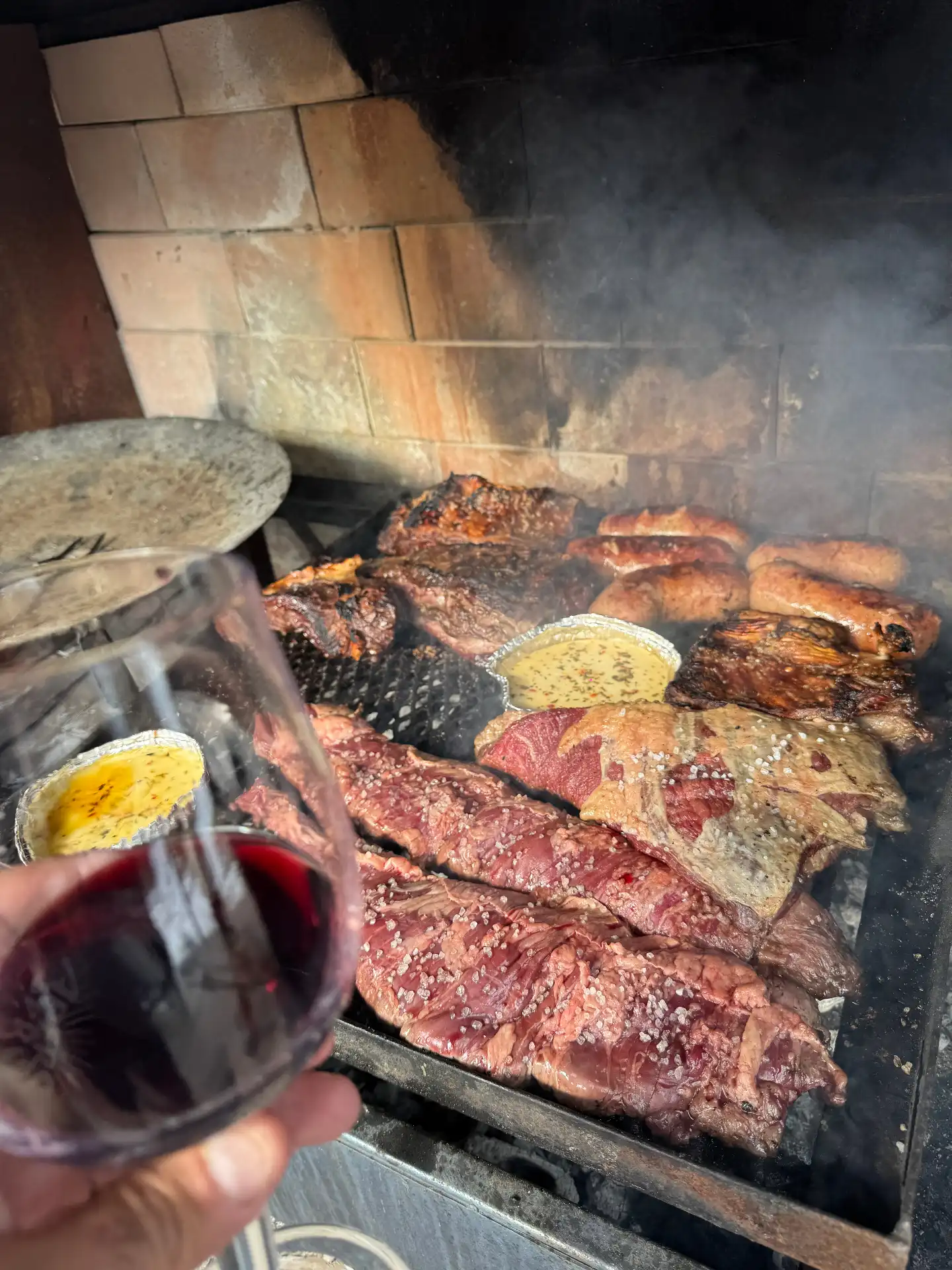
Some winters I want to spend my evenings walking around Bariloche before sitting down to an incredible steak and a bottle of Malbec. Other years all I care about is skiing or riding fresh powder above Santiago. Sometimes I deliberately travel to Ushuaia because skiing or snowboarding at the end of the world is an experience every serious rider should have at least once.
The mountains are the reason I book the flights. Everything around them is the reason I keep coming back.
A conversation I had a few years ago always makes me smile. Someone casually told me she was "a winter girl" because her birthday was on the 11th of August. For a second it sounded strange. Then I remembered — winter depends entirely on which side of the planet you're standing.
While most people are enjoying beaches, hiking and summer holidays, winter is in full swing across the Andes. Instead of putting your skis or snowboard away and waiting another eight or nine months for the next season, you simply head south.
You do not wait for winter; you follow it. Or perhaps it is better to say that you dance with the seasons.
What You'll Learn in This Guide
This guide isn't a ranking of the best resorts for skiing and snowboarding in South America. It's a practical guide to help you choose the right destination for your first ski or snowboard trip to Argentina or Chile.
In the next sections we'll compare the main ski regions, introduce every major ski resort, look at the strengths and weaknesses of each destination and help you decide which mountains best match your skiing or riding style, travel plans and expectations.
Let's begin with Argentina, where most first time visitors eventually find themselves deciding between two very different experiences: the lakes and mountains around Bariloche or the high alpine terrain of Las Leñas.
Argentina: A Popular Starting Point for a South America Ski or Snowboard Trip
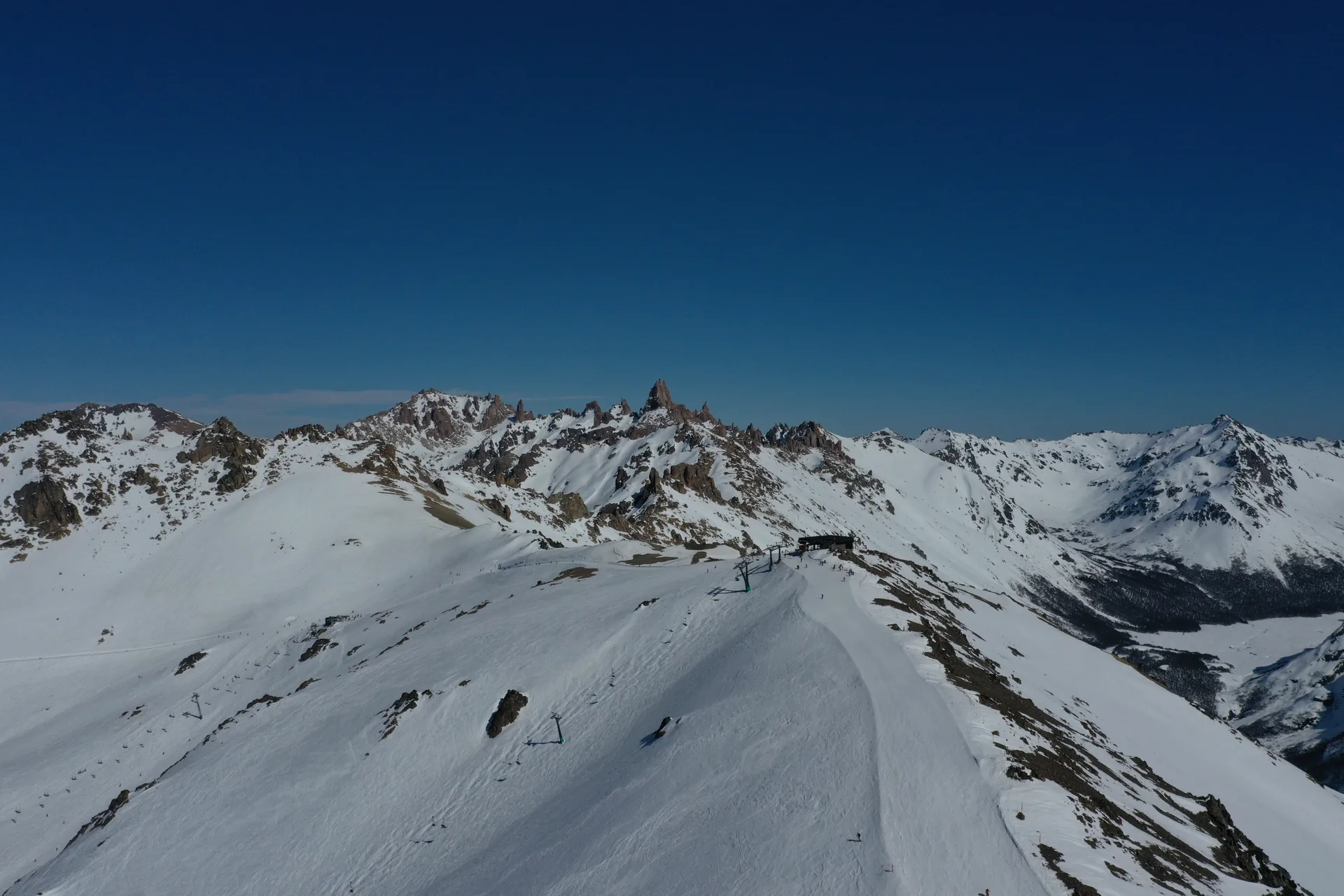
Ask ten people who have been skiing or snowboarding in South America where they would recommend for a first trip, and chances are Bariloche will come up more often than anywhere else.
That's not because it has the highest mountain, the deepest snow or the most modern lifts. It's because it offers the most complete experience.
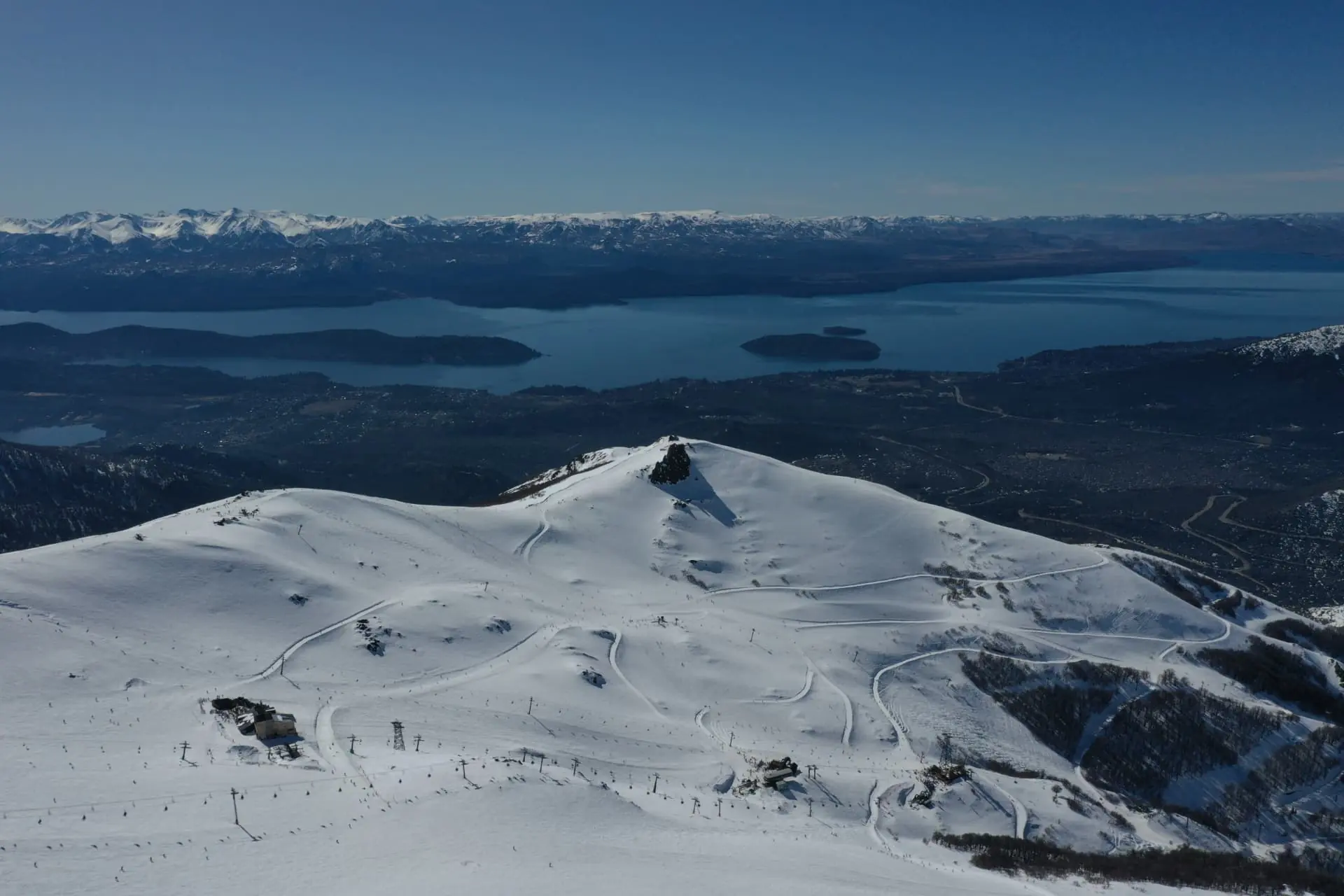
Bariloche is one of those places where the skiing or snowboarding is only part of the holiday. The city sits on the shores of Nahuel Huapi Lake, surrounded by the Andes, forests and some of the most spectacular scenery in Patagonia. Once the lifts stop spinning, you're not heading back to a quiet hotel in the middle of nowhere. You're returning to a lively mountain town full of excellent restaurants, breweries, chocolate shops and cafés that stay busy long after the ski day has finished.
For many visitors, that's exactly what makes Bariloche the perfect introduction to skiing and snowboarding in Argentina.
Bariloche Is More Than Cerro Catedral
One mistake I often see online is people treating Bariloche and Cerro Catedral as if they're the same thing. They're not.
Cerro Catedral is the best known and most developed ski resort in Argentina, and for many people it's the main reason to visit Bariloche. But the city itself also makes an excellent base for exploring other parts of northern Patagonia, especially if you're planning a longer ski trip in Patagonia.
Within the region you'll find several resorts that are worth knowing about.
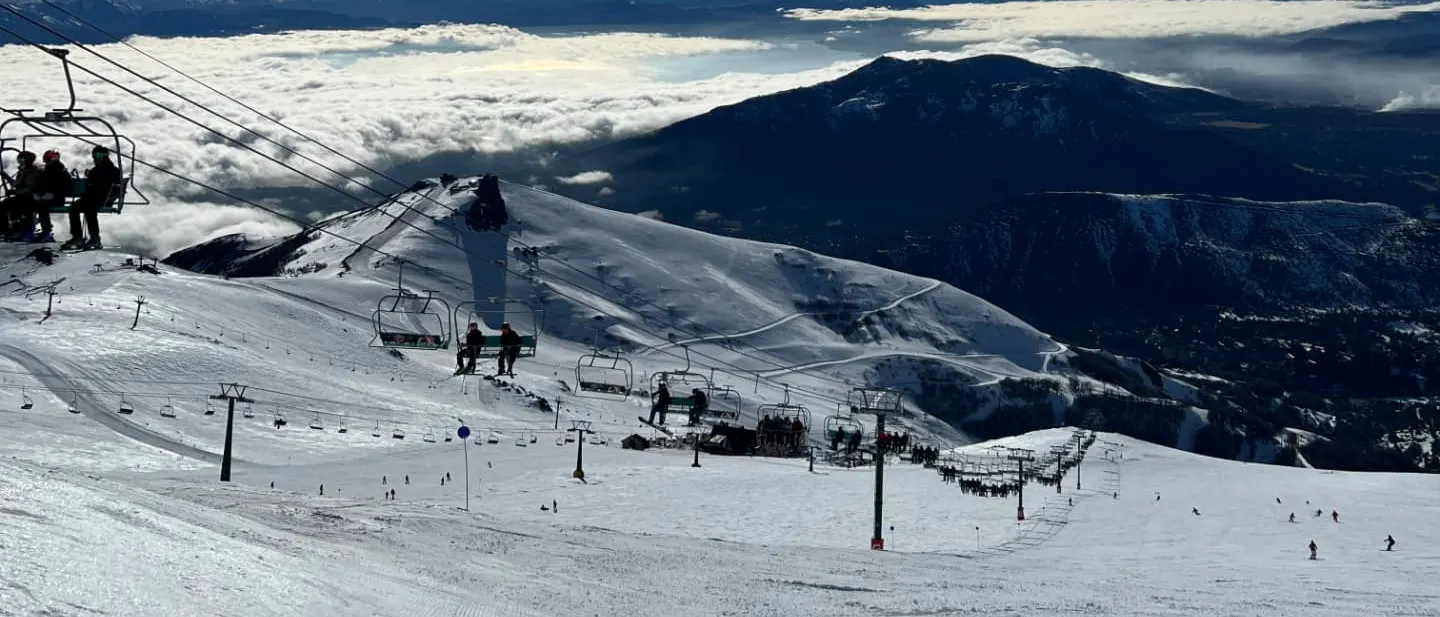
Cerro Catedral is the obvious heavyweight. It offers one of the largest and most developed lift accessed ski and snowboard experiences in South America, everything from gentle groomers to steep chutes, and enough variety to keep most skiers and snowboarders busy for an entire week. It also has the continent's most developed base village, making it a destination in its own right.
Cerro Bayo, a few hours north, overlooks the beautiful town of Villa La Angostura. It's much smaller than Cerro Catedral but has a relaxed atmosphere, stunning lake views and some of the most picturesque skiing and snowboarding anywhere in Argentina.
Chapelco, just outside San Martín de los Andes, is another favourite among returning visitors. It combines beautifully spaced tree skiing and riding with wide groomed runs and a quieter atmosphere than Bariloche. It's one of those resorts that rarely disappoints, particularly after fresh snowfall.
Perito Moreno, farther south near El Bolsón, is one of Argentina's fastest-growing ski resorts. It's still relatively unknown outside South America, but recent investment has steadily expanded its lift network and terrain. If you enjoy discovering places before they become internationally famous, Perito Moreno deserves a place on your radar.
Each resort has its own personality, which is exactly why many skiers and snowboarders choose to spend ten days or even two weeks exploring northern Patagonia rather than skiing a single mountain.
What About Las Leñas?
If Bariloche is Argentina's best all-round ski destination, Las Leñas is its specialist.
Nobody accidentally ends up skiing or snowboarding at Las Leñas. You plan a trip there because you want Las Leñas.
Located in Mendoza Province, hundreds of kilometres north of Patagonia, it's famous for steep terrain, impressive vertical drop and legendary off piste skiing and riding. On the right snow year it's one of the most exciting lift accessed ski resorts anywhere in the Southern Hemisphere.
The trade-off is that Las Leñas isn't trying to be a traditional ski town. Accommodation is concentrated around the resort itself, the lift network is much smaller than Cerro Catedral's and access depends on a combination of flights and a long drive through the mountains.
For advanced skiers and snowboarders, however, that's often part of the appeal. If your priority is challenging terrain rather than restaurants, breweries or exploring Patagonia, Las Leñas deserves serious consideration.
Don't Overlook Buenos Aires
One question I get surprisingly often is whether it's worth spending time in Buenos Aires before flying south to Bariloche.
For me, the answer is almost always yes. In fact, I've done it so many times that it's become part of my routine.
I usually arrive in Buenos Aires early in the morning, leave the airport, head straight into the city, spend a few hours walking around Palermo and make sure I've booked lunch at Don Julio, one of my favourite steakhouses anywhere in the world. After lunch I simply grab a taxi to the domestic airport and continue to Bariloche later that afternoon.
It adds a few hours to the journey, but it transforms a travel day into part of the holiday.
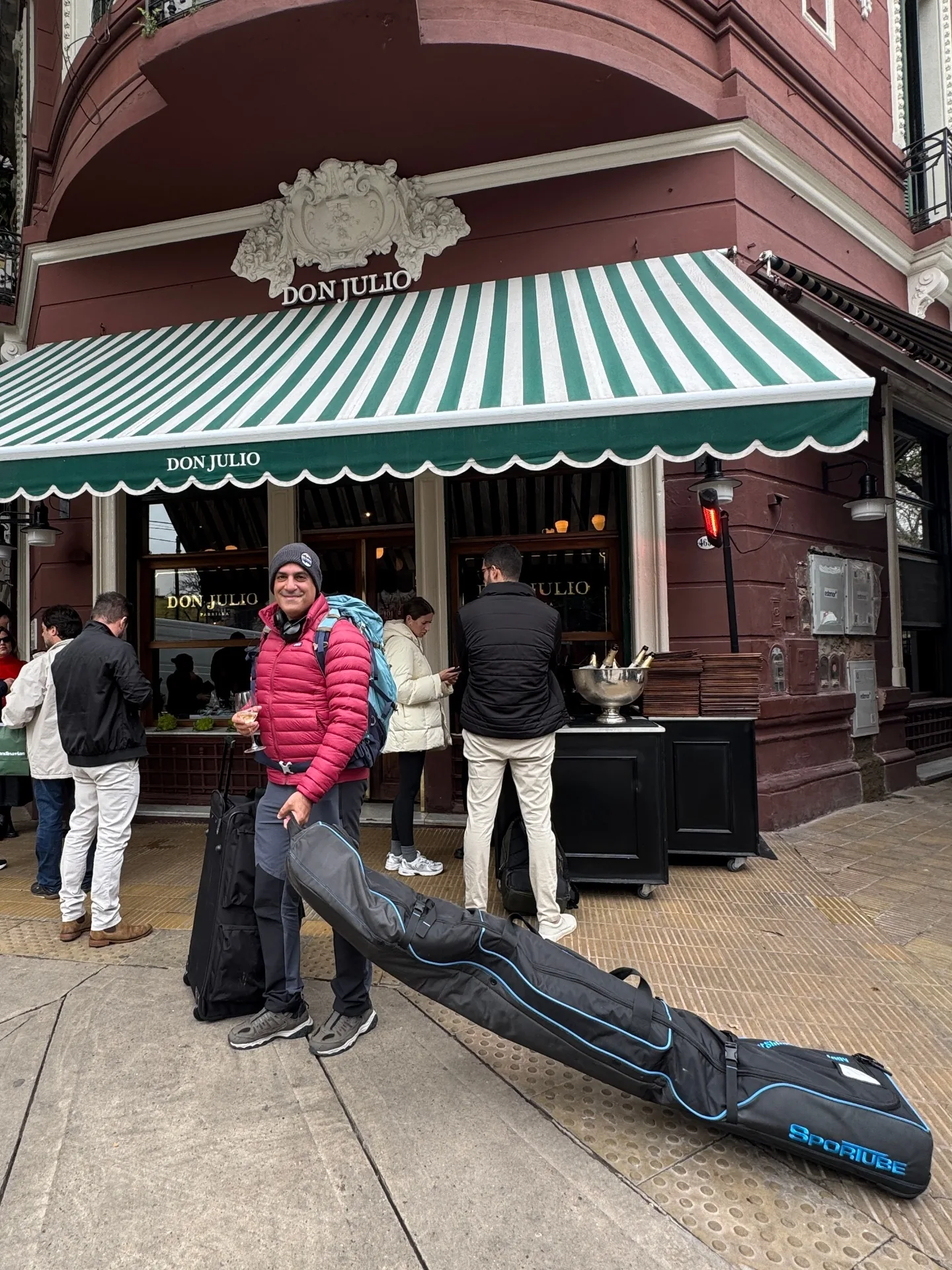
If your schedule allows it, I'd recommend spending at least a night or two in Buenos Aires before heading south. Great food, outstanding wine, beautiful neighbourhoods and one of South America's best nightlife scenes make it well worth the stop.
Sometimes the best part of a ski or snowboard trip to Argentina starts before you even see the mountains.
Chile: High Altitude Skiing and Snowboarding Near Santiago
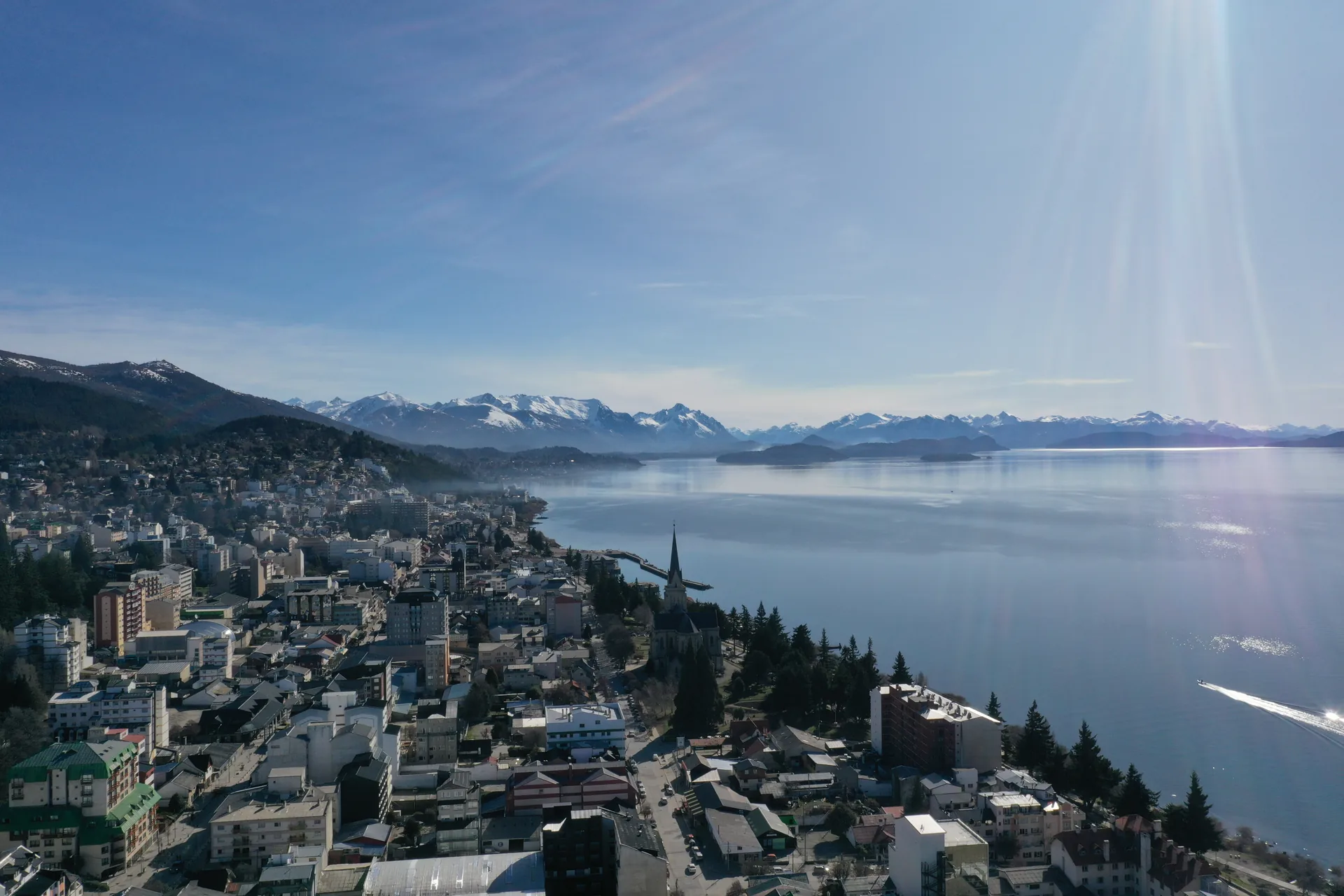
If Argentina's biggest strength is variety, Chile's biggest advantage is convenience.
For many international visitors, a ski or snowboard trip to Chile is simply easier to organise. You fly into Santiago, spend a couple of hours driving into the Andes and suddenly you're surrounded by some of the highest lift accessed skiing and snowboarding in South America.
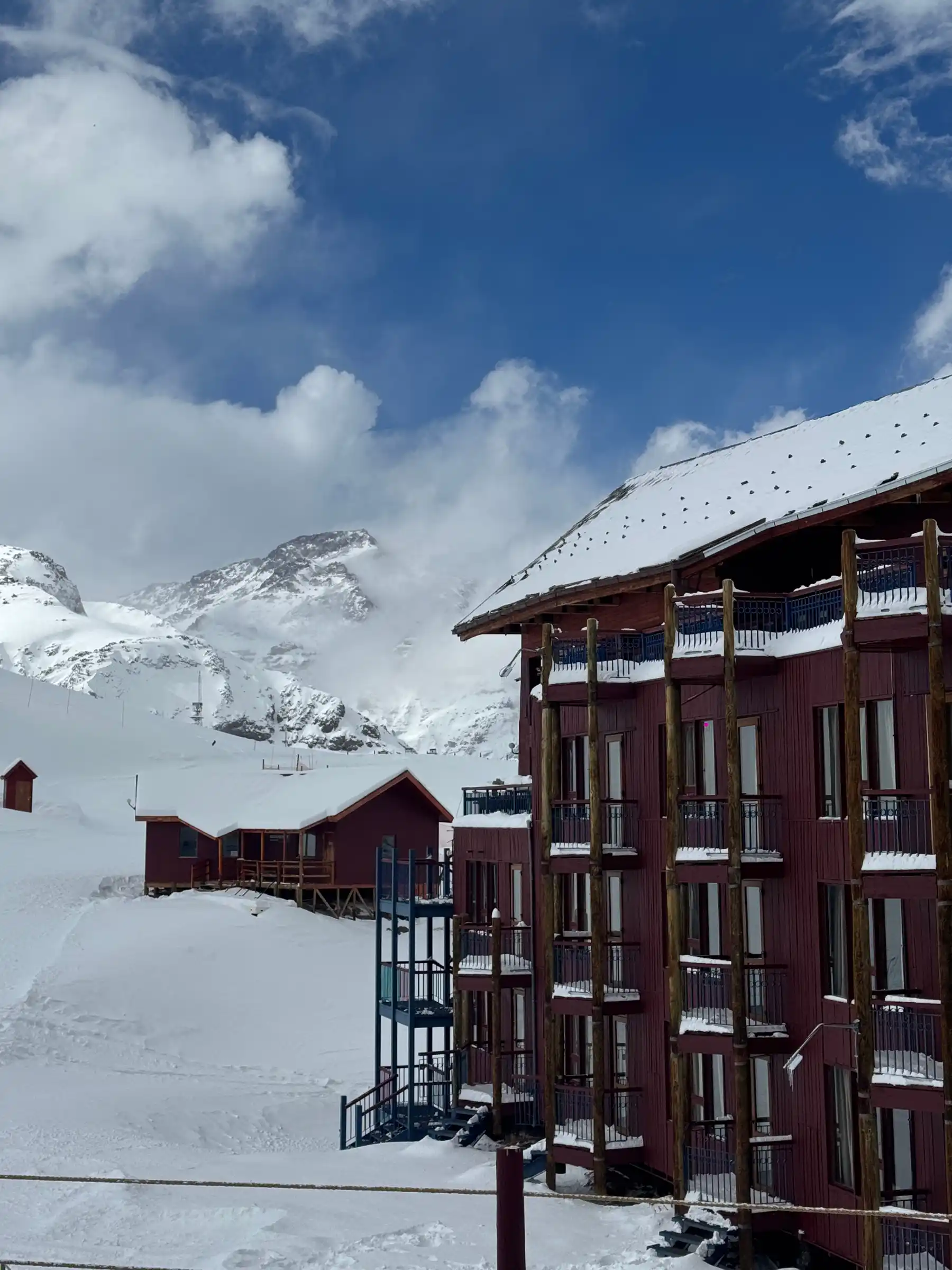
The three resorts most visitors compare are Valle Nevado, La Parva and El Colorado. Because they're built on the same mountain range, many first time visitors assume they're one giant interconnected ski area like you'll find in France, Austria or Italy.
Technically, skiers and snowboarders can move between parts of these resorts. In practice, it's a little more complicated. Today they're owned and operated by different companies. Valle Nevado and La Parva work closely together and offer reciprocal lift access on selected passes, making it easy to enjoy both during the same holiday. El Colorado, however, operates separately, so you'll normally need its own lift ticket if you plan to ski there.
That surprises a lot of people on their first visit, but once you understand how the system works, planning your trip becomes much easier.
Valle Nevado
If someone asked me which resort in Chile for both skiers and snowboarders offers the most complete experience, I'd probably start with Valle Nevado.
At around 3,670 metres above sea level, it's one of the highest major ski resorts in the Southern Hemisphere. That elevation helps preserve snow quality and is one of the reasons many national ski teams choose to train here during the Northern Hemisphere summer.
The terrain is varied enough to keep almost everyone happy. Wide groomed runs suit intermediate skiers and snowboarders, while bowls and off piste terrain for skiing and riding provide plenty of opportunities after a storm. If you are the type of skier or snowboarder who enjoys making fast carving turns on perfectly prepared corduroy in the morning before venturing into softer snow later in the day, Valle Nevado delivers both.
The resort has also seen the most significant infrastructure investment in recent years. Lifts such as Andes Express move skiers and snowboarders efficiently across the mountain, making it easier to maximise time on the mountain instead of standing in queues.
For many people planning their first ski or snowboard holiday in Chile, Valle Nevado becomes the obvious starting point.
La Parva
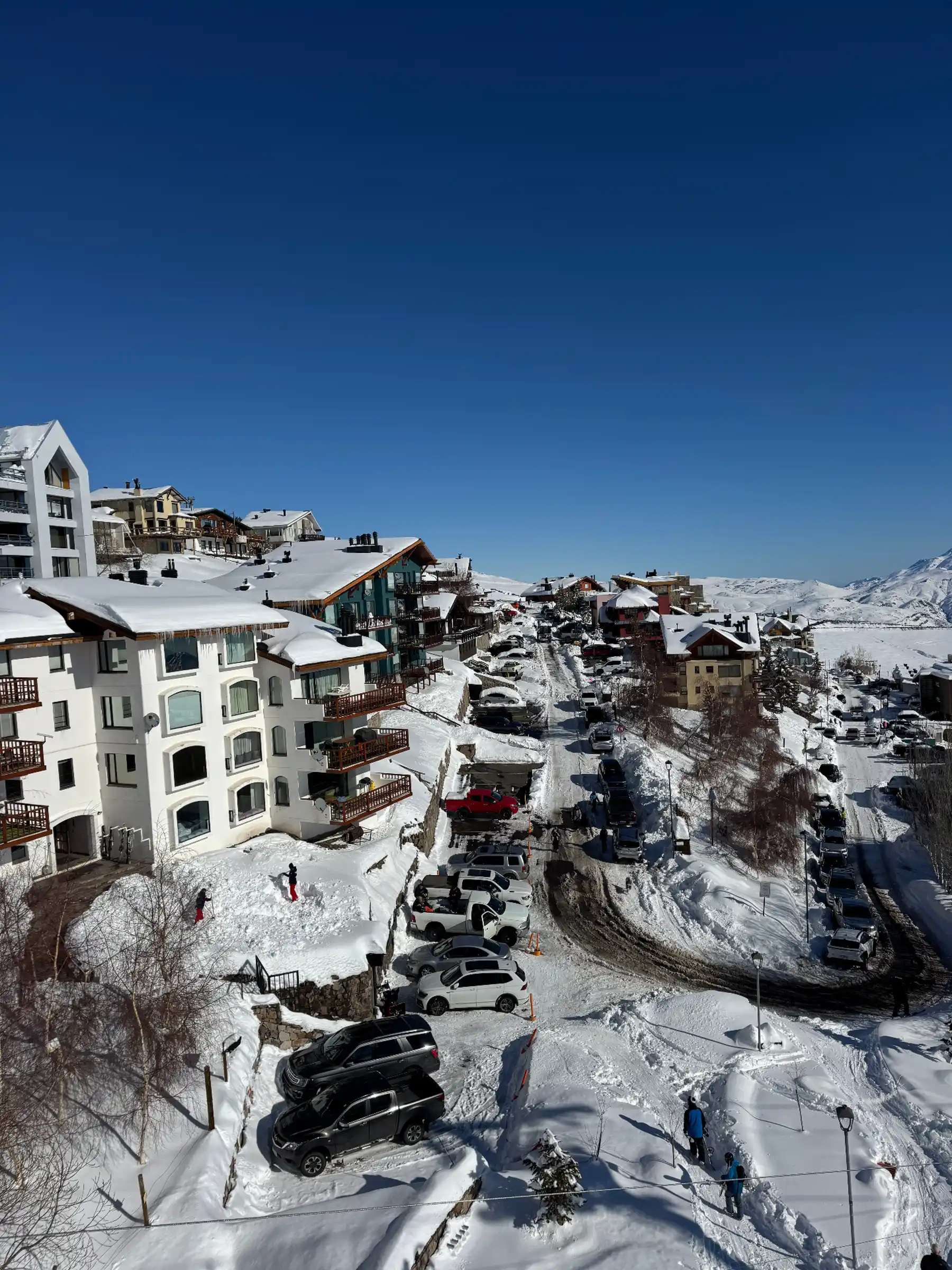
Although La Parva sits beside Valle Nevado and can be linked by ski connections when conditions and operations allow, it has a very different personality.
It feels more local, more traditional and, after a good snowfall, it becomes one of my favourite places to ski or snowboard in Chile.
If powder is your priority, La Parva deserves serious attention. There are countless lines that locals know well, and exploring them is part of the fun. Do not expect high speed six person chairlifts everywhere, though. Much of the mountain still relies on older double, triple and quad chairlifts together with several T bars, giving the resort a more old school atmosphere than Valle Nevado. Snowboarders should factor those surface lifts into the decision, especially if they dislike long T bar rides.
Some people see that as a disadvantage, while others think it is part of La Parva's charm.
El Colorado
Then there's El Colorado, a resort that's often underestimated by first time visitors.
One side of the mountain is ideal for skiers and snowboarders who enjoy perfectly groomed slopes and making technical carving or slalom turns. The other side opens into enjoyable off piste terrain for skiing and riding that can hold excellent snow after storms.
Like La Parva, El Colorado still relies on several older lifts and T bars, so don't expect the same modern feel you'll find at Valle Nevado.
What it does offer is variety. That's one of the reasons I recommend spending at least one day here if your itinerary allows it.
Portillo: One of the Andes' Great Classics
No article about skiing and snowboarding in Chile would be complete without mentioning Portillo.
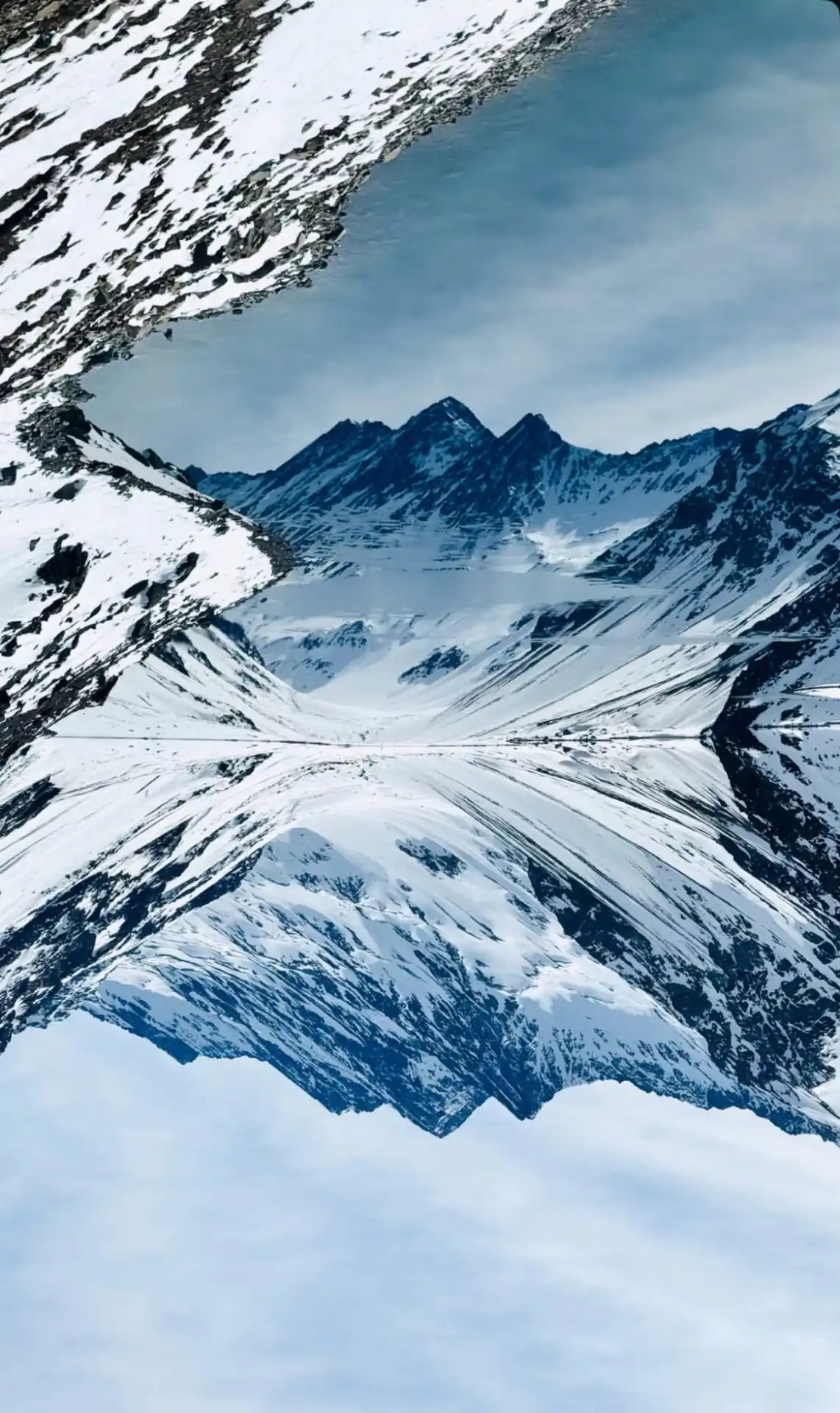
It's one of the most famous ski resorts in the Southern Hemisphere and probably the most recognisable, thanks to its bright yellow hotel overlooking Laguna del Inca.
Portillo is not the place most people choose for a flexible road trip; it is a self-contained mountain experience. Most visitors stay on one of Portillo's accommodation packages, with meals included depending on the package, and spend three, four or seven nights almost entirely focused on skiing and snowboarding.
The terrain is excellent, the scenery is unforgettable and, when conditions allow, heli skiing in Chile is another reason experienced skiers and snowboarders are drawn here.
If you're looking for a lively ski town with dozens of restaurants and bars, Portillo probably isn't the right choice. If you're looking for a classic mountain experience where everything revolves around skiing and snowboarding, it's difficult not to appreciate what Portillo offers.
Beyond Santiago: Chile's Other Side
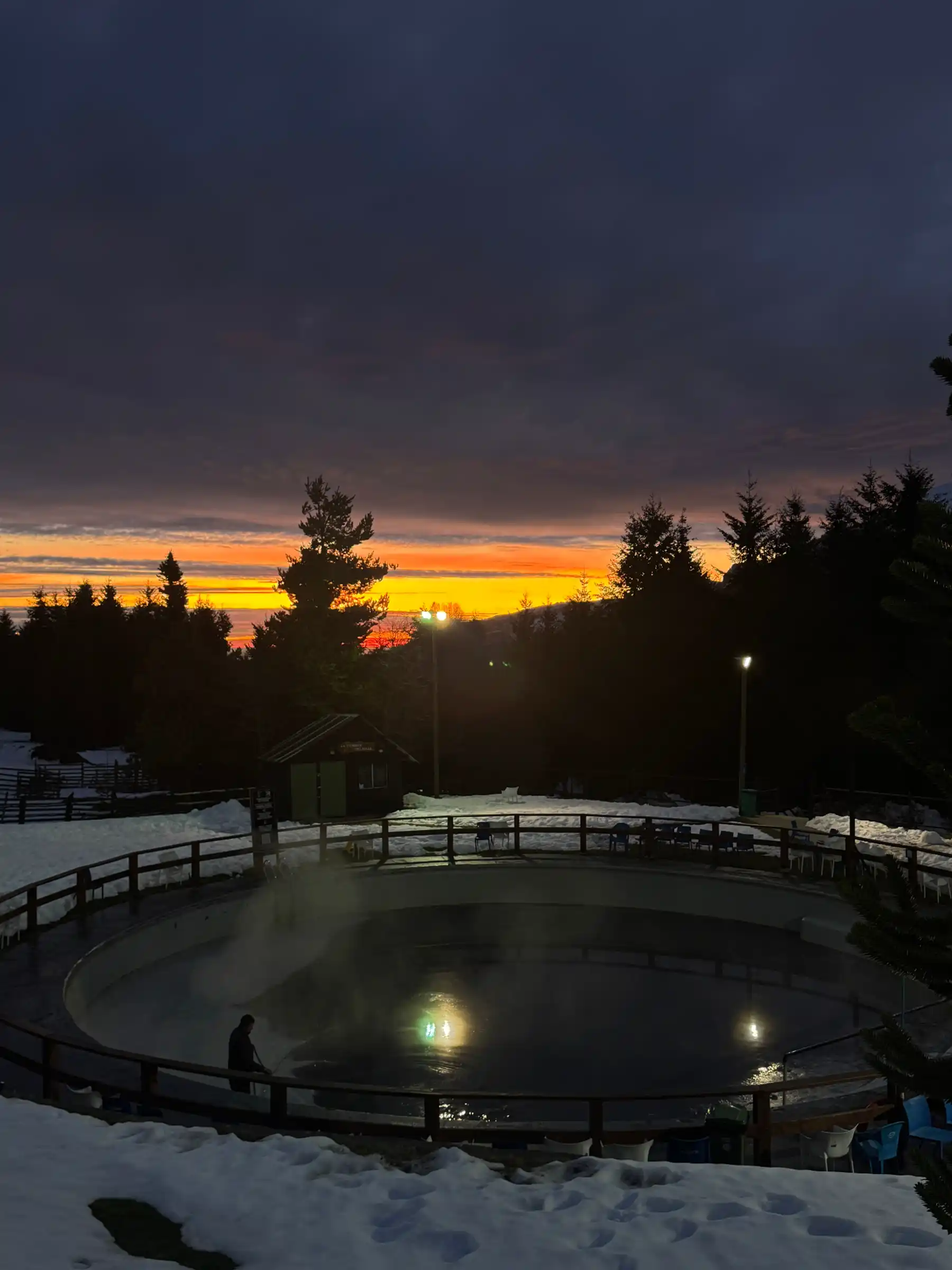
Most international visitors never travel beyond Santiago for skiing or snowboarding, and that is understandable. The Tres Valles resorts are easy to reach and offer enough terrain for a fantastic holiday.
But Chile has another side that deserves attention. Head south and you'll discover resorts that feel completely different from anything around Santiago.
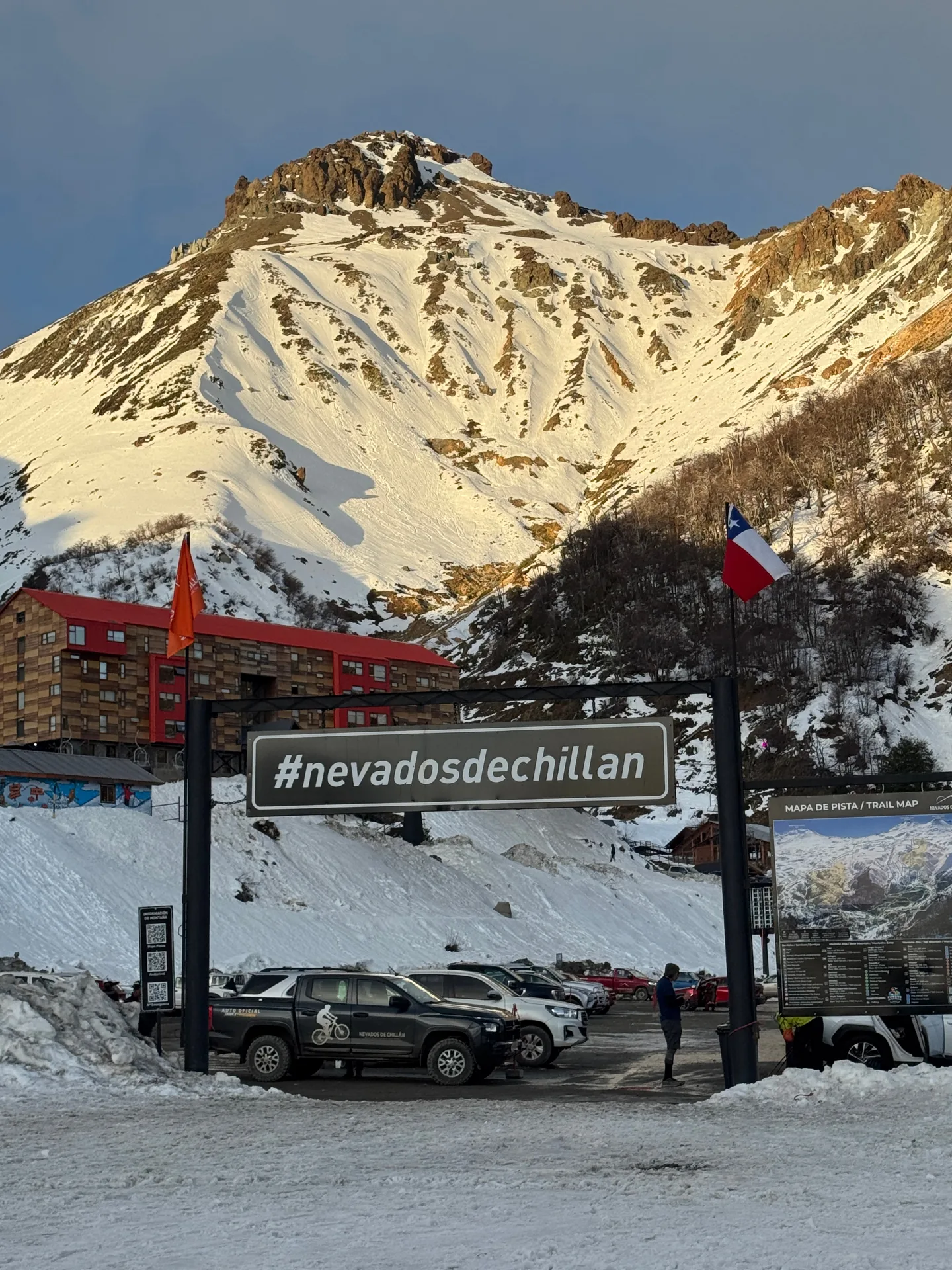
Nevados de Chillán is the best known. Built around an active volcanic region, it combines skiing with natural hot springs, beautiful forests and excellent opportunities for powder skiing and riding. It is also a strong base for guided snowmobile assisted skiing and riding and ski touring beyond the lift served area.
Continue farther south and you'll find resorts such as Corralco and Antillanca, where the pace slows down, the crowds become smaller and the scenery becomes every bit as memorable as the skiing or riding itself.
These are not destinations I would recommend squeezing into a four day trip. They deserve their own itinerary. If you are looking to ski or snowboard in Patagonia or explore southern Chile beyond the better known resorts, they're well worth considering.
South America's Major Ski and Snowboard Resorts at a Glance
Before you start comparing flights or booking accommodation, it's worth seeing how the main ski resorts compare. The figures below are approximate and can change slightly as resorts add lifts, open new terrain or update their trail maps, but they provide a good overview of what each destination offers.
| Resort | Country | Summit | Base | Vertical | Skiable | Runs | Lifts |
|---|---|---|---|---|---|---|---|
| Cerro Catedral | Argentina | 2,180 m | 1,030 m | 1,150 m | ~120 km | 60+ | 30+ |
| Chapelco | Argentina | 1,980 m | 1,250 m | 730 m | ~31 km | 30+ | 12 |
| Cerro Bayo | Argentina | 1,782 m | 1,050 m | 732 m | ~24 km | 25+ | 16 |
| Perito Moreno | Argentina | 1,770 m | 1,030 m | 740 m | ~25 km | 20+ | 10 |
| Las Leñas | Argentina | 3,430 m | 2,240 m | 1,190 m | ~65 km | 30+ | 14 |
| Cerro Castor | Argentina | 1,057 m | 195 m | 862 m | ~35 km | 30+ | 12 |
| Valle Nevado | Chile | 3,670 m | 2,860 m | 810 m | ~40 km | 40+ | 17 |
| La Parva | Chile | 3,630 m | 2,650 m | 980 m | ~40 km | 40+ | 15 |
| El Colorado | Chile | 3,333 m | 2,560 m | 773 m | ~40 km | 100+ | 22 |
| Portillo | Chile | 3,310 m | 2,548 m | 762 m | ~35 km | 35+ | 14 |
| Nevados de Chillán | Chile | 2,400 m | 1,580 m | 820 m | ~35 km | 35+ | 13 |
Which Ski or Snowboard Resort Is Right for You?
If you've made it this far, you've probably realised there isn't a single "best" answer. Instead, here's how I'd simplify the decision.
- Choose Cerro Catedral if you want one of the largest and most developed resort experiences in South America, a lively mountain town and enough terrain to keep you entertained for a full week.
- Choose Las Leñas if your priority is steep terrain, challenging skiing and riding and the chance of unforgettable off piste days.
- Choose Valle Nevado if you are looking for modern lifts, high altitude terrain and an easy first ski or snowboard trip to Chile.
- Choose La Parva if powder skiing and riding is high on your list and you don't mind older lifts in exchange for fantastic terrain.
- Choose El Colorado if you enjoy a mix of carving pistes and accessible off piste terrain.
- Choose Portillo if you are after a classic lodge experience where the entire trip revolves around time on the mountain rather than nightlife.
- Choose Cerro Castor if skiing or snowboarding at the southern end of the world has always been on your bucket list.
- Choose Nevados de Chillán if you're looking for something different — volcanoes, hot springs and some of Chile's most memorable landscapes.
If your trip is longer than ten days, do not automatically choose just one. One of the biggest advantages of skiing and snowboarding in South America is that many itineraries can be combined. Spending a week around Bariloche before flying to Santiago, or skiing or riding the Tres Valles before continuing south to explore Chile's volcanic ski resorts, creates a completely different experience from staying in one place.
That's one of the reasons I rarely ski the same itinerary twice.
My Final Thoughts
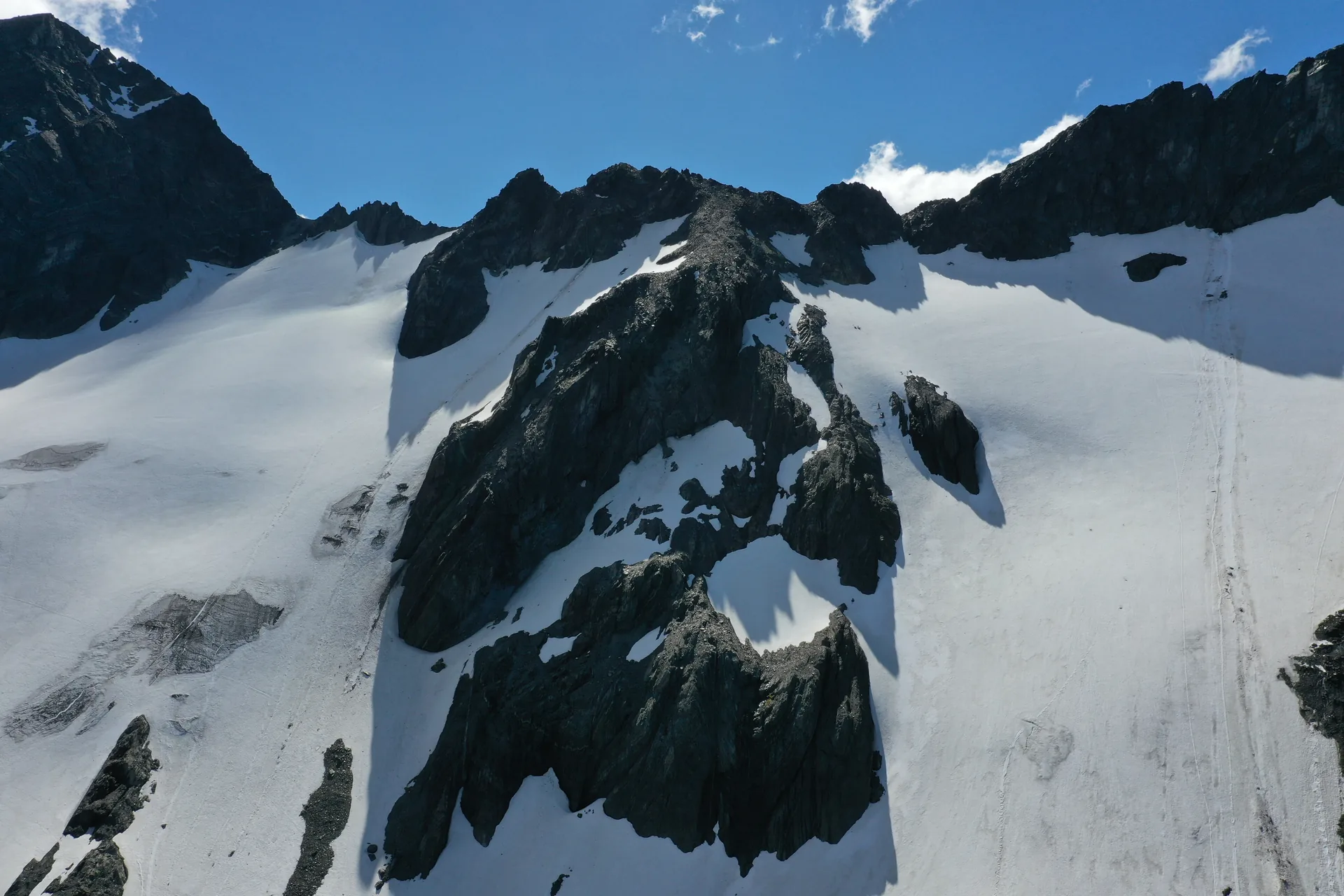
People often ask me which country I prefer for skiing or snowboarding, Argentina or Chile, and I still do not have a definitive answer.
Argentina probably wins me over with its food, wine and the atmosphere of towns like Bariloche. Chile impresses me with its altitude, modern infrastructure and the convenience of having several major ski resorts so close to Santiago.
Fortunately, you don't have to choose a favourite forever. You only have to choose the right destination for this trip.
If this is your first visit, do not overcomplicate it. Pick one region, spend enough time to enjoy it properly and learn how skiing and snowboarding in the Andes work. Then come back and experience another part of South America next winter.
That's exactly how many of us started. And before long, you'll find yourself doing what I still do every year — following winter from one hemisphere to the other.
Planning Your Own South America Ski or Snowboard Trip?
Every skier and snowboarder travels differently. Some are looking for the best powder. Others want the easiest logistics, the best value, or a trip that combines skiing or snowboarding with great food, wine and a few unforgettable road trips through Patagonia.
That's exactly why I created YourSnowPlanner. Rather than recommending the same itinerary to everyone, I help skiers and snowboarders choose the destinations, timing and logistics that make the most sense for their trip.
Even if you don't need help planning, I hope this guide has made choosing where to ski or snowboard in South America a little easier.
Frequently Asked Questions
When is the best time to ski or snowboard in South America?
The season generally runs from mid-June until late September, with July and August offering the most reliable snow at most resorts. Depending on snowfall and temperatures, September can provide excellent conditions with fewer crowds.
Is Argentina or Chile better for skiing and snowboarding?
Neither country is objectively better. Argentina generally offers better food, wine and mountain towns, while Chile provides easier access from Santiago, higher altitude resorts and modern infrastructure. The best choice depends on the type of ski or snowboard trip you are planning.
What is the largest resort for skiing and snowboarding in South America?
Cerro Catedral, near Bariloche, is widely considered one of the largest and most developed ski resorts in South America. Resort size can be measured by kilometres, hectares, lifts or marked runs, so comparisons vary by source.
Can I ski or snowboard at more than one resort during the same trip?
Absolutely. Many visitors combine several resorts, especially around Bariloche or Santiago. Longer itineraries often combine skiing or snowboarding in Argentina and Chile, creating one of the best ski holidays in the Southern Hemisphere.
Is skiing or snowboarding in Patagonia worth it?
Yes. Whether you choose Bariloche, Cerro Castor or the volcanic ski resorts of southern Chile, the combination of dramatic scenery, excellent skiing and snowboarding, together with unforgettable road trips makes it one of the world's most rewarding destinations for skiers and snowboarders.
Filed under
Author
Khosro Ronagh (Cogo)
Founder of YourSnowPlanner. 150 to 200 ski days a year across the world including Argentina, Chile, the Alps, Japan, Alaska and major ranges. Personal planning for skiers heading to South America.
About Cogo →